Showing posts with label LGBT. Show all posts

Sunday, June 11, 2023

BOOK REVIEW: Ocean's Echo by Everina Maxwell

This is the second book set in the Universe of Winter's Orbit written by Everina Maxwell. Ocean’s Echo is not a direct sequel, but it has numerous similarities to Winter's Orbit. Both books are centered around a male-male romance. One would think that this feature would make Ocean’s Echo resonate with me, but unfortunately, it was not enough to win my favor in this case. 

I don’t have a lot of experience with the romance genre, but it is my understanding that it is dominated by female authors. This fact is apparently true of male-male romance as well. I’m not saying that women can’t write effective gay love stories (there are clear examples of amazing gay romances like Heartstopper and The Song of Achilles that have women authors) but there’s something about the romantic interactions between the two male protagonists in Ocean’s Echo that just seems “off” or inauthentic to me. I had an ill-defined feeling of unease while reading Winter's Orbit but I think that perhaps I was so impressed by the very existence of a viable space opera with a male-male romance at its core that I didn't want to quibble about its authenticity. However in Ocean’s Echo my misgivings about the verisimilitude of the gay romance swamps my generally positive impressions of the other parts of the narrative.

In Ocean’s Echothe two male protagonists are Tennalhin Halkana (Tennal) and Lieutenant Surit Yeni (Suri). They are very different people but they have several things in common; primary among these is that they both have very powerful mental powers. Their powers are complementary: Tennal is a “reader,” someone who is able to read the minds of others (i.e. a telepath) while Suri is an “architect,” someone who can “write” or force other people to do what they want by mental force. Oftentimes, an architect is mentally bonded (or “synced”) with a reader in such a way that the architect completely takes over the reader’s mind and uses their combined mental powers to write and read those around them.

Some people have described Winter's Orbit as romance with SF and Ocean’s Echo as SF with romance. In other words, in the first book, the romance storyline was subordinate to the political and space opera themes while in Ocean’s Echo the balance is reversed. I suppose I agree with this characterization of the books, but from my perspective it doesn’t tell the whole story because I liked (or at least didn’t recoil from) the romance elements in Winter's Orbit but the romance elements in Ocean’s Echo didn’t work for me at all.

I think the main source of my adverse reaction to the love story in Ocean’s Echo is simply the nature of the characters involved. In Winter's Orbit, the two guys were very different from each other, socially, politically, and even culturally. One is a mess and flamboyant and the other is reserved and careful. But they both seemed interesting (and even attractive) to some extent, so that I was hopeful and invested in the resolution of their relationship. In Ocean’s Echo, the two guys are also very different, with Tennal being something of a chaos monster (who has a powerful planet-wide politician as his aunt) and Surit being a dutiful member of the military (who happens to have an infamous traitor as his mother). I mostly identified with Surit, but Tennal has the bigger role and probably must be considered the primary character in the book. However, to me Tennal just is not very likable, so I never really saw what Surit would see in him and why I would/should root for these two guys to get together or fall in love. This is my primary problem with the book. I mean, how can you have a romance novel if the reader really doesn't like one of the protagonists in the couple?

To be clear, there are several aspects of Ocean’s Echo that I do like. For example, it includes multiple SF elements: spaceships, astronomical anomalies, alien artifacts, man-made habitats, and various advanced technologies. However, as I mentioned earlier, in this book the romance storyline is more prominent than the space opera elements and this was a decided downer for me.

I hope that in future books Maxwell continues to feature same-sex romances in space opera contexts; I think this is a great idea and I would love to read more books like this. I just hope that future books include characters that are more realistic and likable!

Title: Ocean’s Echo.
Author: 
Everina Maxwell.
Format: Kindle.
Length: 464 pages.
Publisher: Scribner's.
Date Published: November 1, 2022.
Date Read: February 20, 2023.

GOODREADS RATING: ★★★☆☆  (3.0/5.0).

OVERALL GRADE: B (3.0/4.0).

PLOT: B.
IMAGERY: B-.
IMPACT: B+.
WRITING: B.

Friday, January 13, 2023

BOOK REVIEW: After Atlas (Planetfall, #2) by Emma Newman


I have not read any books by Emma Newman before and I usually make a habit of reading the books in a series in story order but After Atlas is the second book in Newman’s 4-part Planetfall series. However, there are multiple reasons why I decided to begin with After Atlas: it’s got the highest average rating of the four Planetfall books (4.18 on a 5.0 scale), the author says that the books can be read in any order, and, most importantly, it’s a rare mystery-science fiction genre hybrid.

After Atlas is about a homicide detective named Carlos Moreno who is asked to investigate the mysterious and gruesome death of Alejandro Casales, the leader of a religious cult known as The Circle based in Texas. Moreno left The Circle at the age of 16 and his father is still a member of the organization. Forty years before the events of After Atlas, Moreno’s mother famously abandoned her family soon after Carlos was born. She left Earth as part of the original Atlas mission in which 1,000 of the planet’s most accomplished scientists and engineers created and successfully launched a spaceship at the behest of another cult leader known as The Pathfinder who claimed that she had been told the galactic coordinates of where to find God.

In the intervening years since he left the Circle, Moreno has had no contact with Casales or his father, for multiple reasons, but also because The Circle has a strong anti-technological philosophy towards the near-ubiquitous brain-embedded chips that have facilitated the underpinnings of modern society. Primary among these is the use of APAs, or Automated Personal Assistants (basically like a souped-up version of Siri powered with artificial intelligence and direct access to monitor all your bodily functions). 

One of the most interesting aspects of After Atlas is its depiction of the world in which the police procedural story takes place. It's basically a corporate dystopia where capitalism has run amok. There are no more independent nations, there are “gov-corps”--basically mergers of corporations and governments. Casales death happened in a fancy hotel in London in what is now known as Norope (i.e., Northern Europe). Because Casales was an American citizen who died in Norope there was a diplomatic standoff which was broken when the parties agreed to let Moreno (with his known previous ties to the Circle and knowledge of Casales) conduct the investigation into the suspicious death. We get to see how Moreno, who it turns out is basically an indentured servant to the Ministry of Justice due to the way he was exploited as a teenager soon after he escaped the Circle, conducts the investigation with all sorts of cool technological tools at his disposal: 4-D virtual reality walkthroughs of the crime scene captured by insect-sized drones, use of APA-enhanced senses during interrogation of witnesses, and access to vast amounts of surveillance data due to the universality of embedded-chips among the general public.

Another interesting aspect of After Atlas is the broad spectrum diversity of the characters. One of the key villains is a billionaire who has a beautiful trophy husband, and a non-binary person (referred to as a “neuter” using ze/hir pronouns) plays an important role in the plot. Clearly the main character has a Latino name and the author goes out of her way to often describe the physical appearance of minor characters to let the reader know that they represent different races and ethnicities.

The story in  After Atlas is an excellent blend of murder mystery and science fiction which is all too rarely done well. By the end we do find out “who did it” but like all good mysteries, the other aspects of the story are equally, if not more, interesting. In this case, Moreno's success at following the threads of the investigation leads to the discovery of corruption and crimes on a global scale and has a profound impact on the character’s future. This leads to quite a dramatic ending of the novel that has an indelible impact on the world we had been introduced to during the course of the novel.

Title: After Atlas (Planetfall, #2)
Author: 
Emma Newman.
Format: Kindle.
Length: 369 pages.
Publisher: Mullholland Books.
Date Published: November 8, 2016.
Date Read: January 9, 2023.

GOODREADS RATING: ★★★★½☆  (4.5/5.0).

OVERALL GRADE: A (4.0/4.0).

PLOT: A.
IMAGERY: A-.
IMPACT: A.
WRITING: A.

Sunday, November 13, 2022

CA Now Has Two Black LGBT State Supreme Court Justices!

Martin Jenkins

Kelli Evans

LGBT History was made this week with the retention election of California State Supreme Court justice Martin Jenkins on November 8 and the approval of Kelli Evans to join the state's highest court by the Committee on Judicial Appointments on November 10. Jenkins, 69, was nominated to the California Supreme Court in October 2020 by Governor Gavin Newsom. Evans, 54, was nominated to the court by Newson in August 2022. The California State Supreme Court now has seven members and is amazingly diverse:
  • Carol Corrigan, 74, white female
  • Kelli Evans, 54, African-American lesbian woman
  • Joshua Groban, 49, white mam
  • Patricia Guerrero, 50 Latina/Hispanic woman
  • Martin Jenkins, 69, African-American gay man
  • Leondra Kruger, 46, African-American woman
  • Goodwin Liu, 52, Chinese-American man
The court is majority women, majority people of color (one-third Black) and two-sevenths LGBT!
Guerrero is the brand-new Chief Justice of the State of California. Guerrero, Jenkins, Groban and Liu were all successfully retained in the November 8 election.

Thursday, October 13, 2022

FILM REVIEW: Bros

There has been a lot of discussion of the movie Bros in the last few weeks after its opening weekend box-office gross was below expectations and Hollywood basically labeled the film as a "flop." Writer and star of the film Billy Eichner said on social media that "straight people [...] didn't show up for Bros" and that it was "disappointing, but that's what it was." That tweet was later deleted but the audience reception to an explicitly gay rom-com that was released by a major Hollywood studio in movie theaters was bound to get a lot of tongues wagging and think pieces written and read. However, despite the historic nature of the release of Bros, in the end I think the main reason is that it's just not a very good movie, and that may be the reason why ore people didn't rush out to see it and make it a box-office success. (Right now it's still an open question of whether it will make a profit, but it seems very unlikely .)

To be more precise, I do think that there's a version of Bros which could have been a very good movie. The major flaw in Bros is the casting of Eichner as the lead character. Eichner plays Bobby, a somewhat neurotic podcast host and executive director of the inaugural National Museum of LGBTQ History. He is happy to go on Tinder and Grindr "dates" to hookup with other New York City gays.  Eventually he runs into Aaron (played by Luke MacFarlane), a hunky, handsome estate lawyer who hates his job and is also happy to "play the field." Eichner's Bobby spends a lot of his time yelling his (admittedly funny) lines to anyone within earshot, which includes his coworkers, his straight friends, Aaron, Aaron's mom and many more. The first problem with casting Eichner as the lead is that he doesn't have the dramatic chops to provide a nuanced portrayal of Bobby, so he comes across as a bitter queen. I think it is at least possible that a more nuanced actor could have played the role as written where Bobby is still annoying and acerbic but in a way that the audience could still root for him to succeed. I appreciate what Eichner was trying to do with Bros: create a gay rom-com without sanding over the rough (or unfamiliar to non-gay folks) edges of urban gay life to not scare off the straight people. But even as a gay man, I thought Bobby's character was A LOT and problematic in multiple ways. (He has a LOT of opinions on how gay people comport themselves which frankly would have seemed homophobic or demeaning if said by a straight character and even by the end of the movie it's not clear that his opinion about other gays has really changed that much.)

The second problem with casting Eichner as the lead is the resultant glaring lack of diversity in the two leads. In 2022 to think that a gay rom-com should have two gay white dudes as the lead is just hubris and tone deaf. (It stuns me that the coin-counters and pencil pushers at the studio thought this concept would be one that is worth spending $20-30 million on production and marketing. But then again, how much do you want to bet these fiduciary decisions were not being made by a diverse set of greenlighters at the studio?) Yes, the film (cleverly) tries to overcome this lack of diversity in the leads by adding cameos from gay icons as well as making Bobby's workplace a setting with a tapestry of the members of the LGBTQ rainbow. There's a butch lesbian, not one but two(!) transwomen of color, a bisexual and a Generation Z non-binary person who constantly streams their life online. But in now way are these characters are central to the story. The other notable bit of diverse casting in Bros was in an (actually pretty funny) hookup scene that Bobby has with a muscular, masculine Black guy after meeting him at the gym during a "straight-acting" phase. The hookup doesn't end well when Bobby's post-coital voice is an octave higher than his pre-coital one and this revelation that Bobby's butchness was a facade (unsurprisingly) freaks the Black guy out, but maybe not for the reason we might think at first. "Well, would you have hooked up with me if I had talked like this before?" Bobby asks, and the guy says, "Yeah, probably, because you're hot." "Thanks!" Bobby says. "But not now! Now you just seem weird!". On the way out Bobby notices a huge Barbra Streisand poster next to the door, which shows that even butch Black gay guys in New York City love their divas! Yay, intersectionality!

With all that said there are lots of good parts of Bros to like. There are fun cameos by gay icons like Harvey Fierstein (Torch Song Trilogy), Bowen Yang (Fire Island), and Debra Messing (Will and Grace) to name just a few. Aaron is very easy on the eyes to look at, and we see a LOT of him (and his well-sculpted body), as the film doesn't hesitate from depicting typical sexual situations gay men like Aaron and Bobby get into in an urban mecca like New York City (and Provincetown). That fact that almost gthe entire cast (even the straight roles) are played by well-known out LGBT actors is kinda cool. Also, the script is firmly committed to being a parody of Lifetime romantic comedies (this is a fun inside joke, because the actor who plays Aaron has been in more than a dozen of them) and these gags are well-executed. The film has interesting things to say about body image in gay men and how the trappings of (hyper)masculinity distort how gay men interact with each other in multiple social settings (from hookup apps to gyms to going out to even just walking down the street).

But in the end, although the audience is supposed to be rooting for Aaron and Bobby to get together, it's hard to make that sale because I, for one, didn't buy that the two are actually right for each other. Bobby has a LOT of internalized homophobia which comes out as extreme criticism of modern gay life and an reluctance/inability to commit. Aaron has the more interesting character arc as he makes changes to his life when the initial relationship between Aaron and Bobby doesn't work out because of both of their insecurities. (This is not a spoiler because of course in any rom-com the two star-crossed lovers don't live happily ever after after the first fling!) Another interesting twist on the rom-com is that the movie ends with the two just promising "to date each other for three month and re-assess" not a lifetime commitment (sic) and that gives the overall plot verisimilitude with these characters.

Overall, I agree with some of the reviews who say that even though Bros was not the historic achievement Bill Eichner wanted it to be, it is still a milestone in LGBT cinema that he should be proud of and I am glad it was made and exists in the media landscape. After all, for true equality, LGBTQ people need to have the right to have all sorts of media telling our stories, and some will be crappy and some will be sublime. (My primary complaint is that we still really haven't had a diverse LGBT film that connects with today's audiences.) The one thing Bros did do successfully is to bring us closer to the day where the future of LGBTQ representation in the media is not dependent on any single vehicle.

Title: Bros.
Director: Nicholas Stoller.
Running Time: 1 hour, 55 minutes.
MPAA Rating: Rated R for strong sexual content, language throughout and some drug use.
Release Date: September 30, 2022.
Viewing Date: October 3, 2022.

Writing: B+.
Acting: B.
Visuals: B-.
Impact: A-.

Overall Grade: B/B+ (3.16/4.0).

Star Rating:  ★★★½☆☆  (3.5/5.0).

Thursday, March 17, 2022

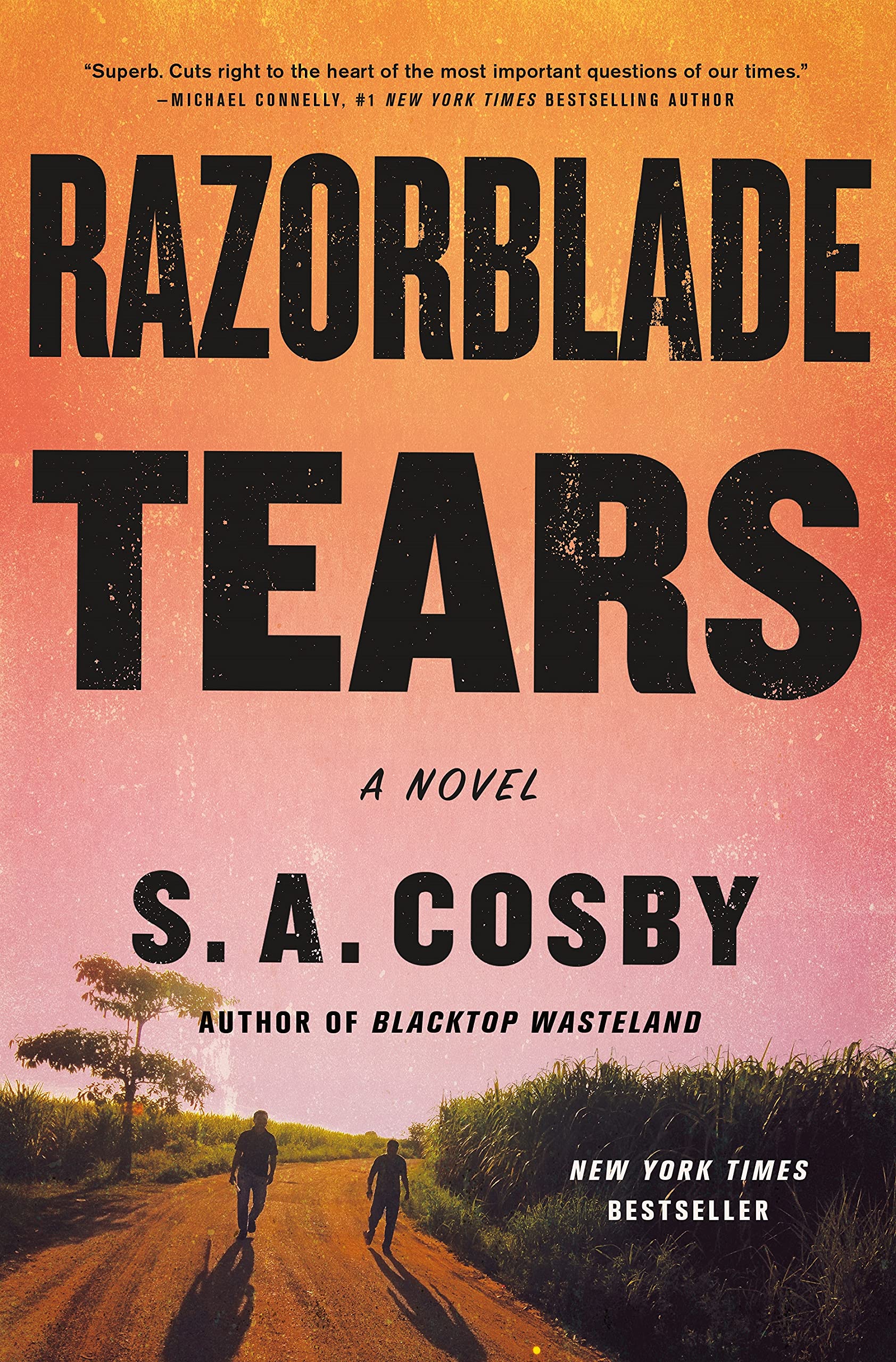
BOOK REVIEW: Razorblade Tears by S.A. Cosby


Razorblade Tears is the first book by this author that I have read; it is his first book after his wildly successful Blacktop Wasteland which won a bucketful of genre awards (Los Angeles Times, Anthony, Macavity, Barry ). The reason I started with Razorblade Tears instead is because it was on sale for $2.99 on Kindle and also because of the intriguing blurb describing the plot.

The first thing that strikes you as you read Razorblade Tears is the superior quality of the prose; Cosby is a master of metaphor and is unafraid to dazzle the reader with the brilliance of his writing. There were several times in the first few chapters that I highlighted sentences and turns of phrases. Eventually one becomes accustomed to instead of entranced by the poetry of the text and the breakneck forward momentum of the plot demands one’s full attention.

The story in Razorblade Tears is incredibly fast-paced and action-packed. After the two dads Buddy Lee and Ike team up as an avenging odd couple trying to find (out) who killed their gay sons, they start poking around and unearth a hornet’s nest of violent gang members, racist bikers, corrupt rap moguls and drug kingpins who are connected to a conspiracy to keep an explosive secret out of public view. Unfortunately for them, they are up against two guys who have suffered the incredibly painful loss of their only sons and fueled by their grief at the violent deaths and their own shame at their own homophobia that warped their relationship with them when they were alive, Buddy Lee and Ike are ready and willing to go as far as it takes (and beyond) to find and punish the people who have brought them such pain by killing their sons. The body count rises rapidly and by the end of the book vengeance has been meted out but at a price which is significant and life-altering to the survivors.

Overall, I was extremely impressed with this first encounter with the work of S.A. Cosby and I intend to read his other work. That said, I wouldn’t call Razorblade Tears a nuanced or complex book. It’s not trying to occupy the niche of the cerebral, densely-plotted mystery that unspools with increasing suspense and narrative tension. Razorblade Tears is more like a full barrel of bourbon rolling down a steep hill with a burning Confederate flag stuck in its side into a large hole that’s leaking profusely: it’s a combustible, compelling spectacle.

Razorblade Tears story moves so quickly that at first you don’t realize how simplistic the plot is. (It’s very easy to figure out who the person behind the boys murders and other crimes is.) But this flaw is outweighed by the overall message that parents should accept their LGBT children for who they are and not try to “change” or disown them because of some heteronormative vision they had of their (and their children’s) lives.


Title: Razorblade Tears.
Author: 
S.A Crosby.
Format: Kindle.
Length: 336 pages.
Publisher: Headline .
Date Published: July 6, 2021.
Date Read: March 8, 2022.

GOODREADS RATING: ★★★★★ (5.0/5.0).

OVERALL GRADE: A/A- (3.83/4.0).

PLOT: B+.
IMAGERY: A-.
IMPACT: A.
WRITING: A+.

Friday, January 07, 2022

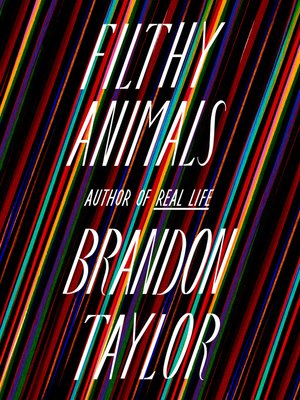
BOOK REVIEW: Filthy Animals by Brandon Taylor

Filthy Animals is a collection of short stories by Brandon Taylor, the author of the critically acclaimed debut novel Real Life. Real Life is about a Black, gay graduate student in a STEM discipline navigating his personal and professional life in a predominantly white, midwestern University town. Taylor drew upon his own experience as a graduate student in biochemistry at University of Wisconsin at Madison to provide a disturbingly real depiction of what it looks like to be “the only one” in multiple different settings that revolve around academia. As someone who has been in similar situations for nearly 35 years (gulp!) to say I resonated with multiple aspects of the novel is to put it much too mildly.

Filthy Animals is both a very similar and a very different book than Real Life. Firstly, it is a collection of loosely connected short stories instead of a novel. Also, both works are centered around the experiences of outsiders in familiar (at least to me, as a professor and dean) academic settings. However, in Filthy Animals the characters in each story change. The short collection (278 pages) consists of 11 stories; five of which (“Potluck,” “Flesh,” “Proctoring.” “Apartment,” and “Meat”) feature three recurring characters I would gladly read an entire book about. They are Charles, a white, muscular, apparently bisexual, twenty-something dancer; Lionel, a Black, gay, mathematics graduate student who struggles with mental health and self-harm ideations; and Sophie, a ethnically ambiguous, highly talented dancer who is in an open relationship with Charles. The stories where Sophie, Charles and Lionel appear are the most compelling in the collection as their foibles get revealed while they interact with each other in surprising ways.

The one-off stories have their own appeal as well. Taylor is almost always presenting characters who demonstrate the different ways one can be isolated or marginalized in society. In several of the stories the protagonist is damaged, injured or sick in some way. (They are often, but not always, gay.) For example, the titular story “Filthy Animals” is a rather disturbing tale about a somewhat feral group of teenage boys who apparently have nothing better to do than accost each other, using sex, violence and sexual violence as a means to relate to one another.

Overall, I think I was less engaged with Filthy Animals than with Real Life so I hope that Taylor returns to novel writing soon. This is not to say that one of the books is objectively “better” than the other. That said, I am glad to see someone with experiences and identities so similar to mine producing such well-received writing. I look forward to reading more of it.

Title: Filthy Animals.
Author: 
Brandon Taylor.
Format: Hardcover.
Length: 288 pages.
Publisher: Riverhead Books.
Date Published: June 22, 2021.
Date Read: December 27, 2021.

GOODREADS RATING: ★★★★☆  (4.0/5.0).

OVERALL GRADE: A- (3.67/4.0).

PLOT: B+.
IMAGERY: A-.
IMPACT: A.
WRITING: A-.

Thursday, November 18, 2021

BOOK REVIEW: China Mountain Zhang by Maureen McHugh


I have been hearing about China Mountain Zhang on Goodreads for so long that I finally decided to break down and read it. China Mountain Zhang is famous for being the debut novel of Maureen McHugh that was nominated for many of the most prestigious awards in speculative fiction: the 1992 Hugo Award, the 1993 Nebula award, the Locus Award for Best First Novel (1993), the James Tiptree, Jr. Award(1993), and the Lambda Literary Award (1993) and winning several of them (Tiptree, Locus and Lambda).

China Mountain Zhang is also well-known for its unusual structure: it is a mosaic novel, i.e. a collection of intertwined stories, all set in a 22nd century United States (and world) dominated by China, and featuring a character named Zhang Zhong Shan, which contains two of the most famous names in the Chinese language, akin to being called George Washington Jones. It so happens that Zhang, the title character, is a guy with multiple secrets. He’s a closeted gay man in a culture rife with state-sanctioned deadly homophobia. Even though he appears to be ABC (American-Born Chinese), in actuality he has a Latino father, his mother named him Rafael and (illegally) provided him with spliced genes that give him his Asian appearance that aligns with his public identity as Zhang.

The reader learns about the world of the twenty-second century through cleverly curated details provided in the stories. For example, we know that the United States is no longer a capitalist democracy because Zhang has to go to a special government office to obtain a new job when he loses (or leaves) the first job we see him have in an early chapter. (This indicates that even in New York City there appears to be a planned economy.) Socially and culturally, China appears to be the zenith of society in the book, and going to China is what most people we meet in the stories aspire to do.

Eventually Zhang goes to spend a difficult 18 months near the North Pole in order to get credit that he can use to finance an education in China that will provide him with engineering and architectural credentials that will allow him much more job flexibility and earning potential in the future. (There are multiple references to communism and Mao Zedong but individual ownership of property does not seem to be outlawed in the United States, although collectives appear to be popular and socially favored.) In my opinion, Zhang is the most important (and frequently appearing) character in the book and his stories are the best passages; it makes sense that he’s the title character.

Overall, although I’m glad that I have finally read China Mountain Zhang, I was not really that impressed with it. Having an openly gay character in 1992 (was and) is definitely ahead of its time, but being unable to realize that societal homophobia (even in a world dominated by Chinese culture) might have abated was not a possible future the author envisioned. So my overall takeaway from the book is that it produces a vision of a downbeat, if not dystopian, future. Of course, not all books need to be upbeat but my hope is that in most books I read the story will be engrossing or engaging to the reader in multiple ways, either in wanting to know how the story ends (here since the book is a mosaic there is no “plot” per se, so this is not a factor) or depicting characters or the setting in a way that cause a visceral connection with the reader (neither really worked for me here although I was curious about how exactly China came to dominate the United States but that story is not fully given). So in the end I view China Mountain Zhang as a creative but not compelling read; it’s suitable for sci-fi completists but probably not for casual aficionados of the genre.

Title: China Mountain Zhang.
Author: 
Maureen McHugh.
Format: Kindle.
Length: 321 pages.
Publisher: Orb Books.
Date Published:  April 15, 1997 (March 1992).
Date Read: October 17, 2021.

GOODREADS RATING: ★★★★☆  (4.5/5.0).

OVERALL GRADE: B+ (3.33/4.0).

PLOT: B.
IMAGERY: B+.
IMPACT: A-
WRITING: B+

Thursday, September 23, 2021

BOOK REVIEW: No Other Darkness (DI Marnie Rome, #2) by Sarah Hilary


No Other Darkness is the second book in the British police procedural crime fiction series by Sarah Hilary starring DI Marnie Rome and DS Noah Jake. This time the main crime to be solved is triggered by the discovery of corpses of two young children in an underground bunker who have been dead for at least five years. Cold cases are always the most difficult of cases, and cases involving dead children are also incredibly hard to take for the personnel involved.


I was surprised at how different in style the second book in the DI Marnie Rome series was from the first, Someone Else’s Skin.  British-Jamaican, openly gay DS Noah Jake is still an interesting character but sadly he has less of a role in this story than he did in the first. No Other Darkness is much more of a psychological thriller than Someone Else’s Skin was, and in my estimation this ends up NOT being an improvement. I’m still interested in seeing how things develop in the lives of Marnie and Noah but  this change in tone made me less inclined to continue reading the series. The central, overarching question in the book is “what kind of person traps two children in an underground bunker and leaves them to die of hunger and/or thirst?” Trying to imagine and/or understand the psychosis of the perpetrator and watching as Marnie and Noah try to come to terms with the kind of person they are looking for is a harrowing experience for the reader.


There is one main thing that the series has going for it, and that’s Marnie (with Noah a very close second). In No Other Darkness we learn a lot more about Marnie’s past. She interacts with her “half-brother” Stephen Keele who is still a incarcerated for the double murder of her/his parents when he was a minor. Their relationship is of course complicated and emotionally fraught. Noah also has a complicated personal relationship; his ne’er’ do’ well younger brother is distracting him from his job trying to help Marnie solve the crime.


Bizarrely, Stephen is not the only minor child who has psychological problems in the story. The adopted child of the couple who discovered the children’s dead bodies, Clancy Boyle, seems to know a lot more about their circumstances than he has revealed initially.


The denouement of the book does involve another situation where Marnie is put into mortal danger as her hunch about a suspect explodes in her face. To me, placing your (female) protagonist in harm’s way is just a lazy way to raise suspense in a crime thriller and the very best writers are usually able to avoid this cliche while still producing pulse-pounding plots. I do hope that the author finds other ways to keep narrative tension in future entries because I do intend to find out more about what happens to Marnie and Noah next.

Title: No Other Darkness.
Author: 
Sarah Hilary.
Format: Kindle.
Length: 414 pages.
Publisher: Headline Books.
Date Published: July 14, 2016.
Date Read: February 7, 2020.

GOODREADS RATING: ★★★★☆  (4.0/5.0).

OVERALL GRADE: A- (3.5/4.0).

PLOT: A-.
IMAGERY: B+.
IMPACT: B+.
WRITING: A-.


Thursday, September 16, 2021

BOOK REVIEW: Someone Else's Skin (DI Marnie Rome, #1) by Sarah Hilary

Someone Else’s Skin is the first book in Sarah Hilary’s Detective Inspector Marnie Rome series. The first book is a pretty standard British police procedural mystery but has some notable and unique aspects. (I just realized that most British police procedurals I read are murder mysteries but there is no dead body in Someone Else’s Skin—only other several serious crimes: attempted murder, kidnapping, sexual battery, wounding and violent sexual domestic abuse.) The primary way in which the Marnie Rome books are different from most police procedurals is Marnie herself. When she was in her early twenties and working as a police officer, Marnie’s mother and father were murdered violently by an adopted son who they had fostered soon after Marnie left home at age 18. The fact that her job is to solve major crimes when she herself is a victim of one is a key difference between the DI Marnie Rome series and others in the genre.


Another strength of this first Marnie Rome book are the secondary characters. For example, her sergeant is Noah Jake, an openly gay, biracial (Jamaican-British) police detective with a handsome, blonde-haired, blue-eyed boyfriend. Her boss is Tim Welland, who was the supervising officer for Marnie’s parents’ crime scene. Marnie’s potential love interest is Ed Belloc, a good-looking guy who works in Domestic Violence Victim Support Services. Unusually, the perpetrator in Someone Else’s Skin is also a highlight of the book (typically I usually find myself less interested in the criminals in the police procedurals I read). 


The plot of Someone Else’s Skin is suspenseful. Both Marnie and Noah get placed in extremely dangerous situations and since it’s the first book, it seemed possible that one or both of them might not make it through to the end of the story without harm.


Overall, I found Someone Else’s Skin quite a strong entry in the British police crime procedural genre: I like that the main character is a female detective and enjoyed the characterization of DS Noah Jake. I look forward to reading the other books in the series. Soon!

Title: Someone Else's Skin.
Author: 
Sarah Hilary.
Format: Kindle.
Length: 423 pages.
Publisher: Headline Books.
Date Published: August 28, 2014.
Date Read: January 4, 2020.

GOODREADS RATING: ★★★★☆  (4.0/5.0).

OVERALL GRADE: A- (3.67/4.0).

PLOT: A-.
IMAGERY: A-.
IMPACT: A-.
WRITING: A-.

Friday, September 10, 2021

BOOK REVIEW: Tastes Like Fear (DI Marnie Rome, #3) by Sarah Hilary

Tastes Like Fear is the third book in the Detective Inspector Marnie Rome series by Sarah Hilary. This series should be right up my alley: it’s a British police procedural featuring a female protagonist set in an urban landscape with a strong, diverse cast of secondary/supporting characters. But Hilary tends to focus the central questions of the books in the psychology of the characters, not only the perpetrators but also in the investigators. It’s not that I’m opposed to psychological thrillers in general. Other authors I often read and enjoy like Louise Penny, Karin Slaughter and of course Tana French often include this aspect in their books but to me there’s something different and off-putting in the way Hilary’s depicts murderous psychoses and emotional trauma from The ways these other authors do it. I think one aspect may be that they leaven it with either humor/genuine goodness (Penny), romance (Slaughter) and incredibly smooth prose (French) while it seems to play a larger role in Hilary’s books. After reading the first and second books, Someone Else's Skin and No Other Darkness, I was somewhat ambivalent about continuing to read the series due to the way the author deploys psychology and my annoyance at her penchant of putting her female protagonist in mortal danger.

Marnie Rome is a police detective who left home as a rebellious teenager and had the horrendous experience of being called to her childhood neighborhood while on duty to discover the teenage boy her parents had adopted a few years after she left home had brutally murdered them with a kitchen knife. Her primary partner and the series' main supporting character is Detective Sargent Noah Jake, a handsome British-Jamaican, openly gay multiracial cop who many of his police colleagues think is being helped by what they call “positive discrimination” in Britain (affirmative action in the USA). Marnie has had experience being a member of an historically excluded group in the London Police and uses her position and authority to train/nudge Noah to be the best copper he can be and ignore the racist flak he gets from fellow officers and the public alike.

All that being said, I decided to dip back into the Marnie Rome series with Tastes Like Fear and I’m glad that I did. DS Jake plays a larger role in Book 3 than he did in Book 1 and since I would read an entire series built around him (Hint! Hint!) this was a plus for me. Another interesting feature of the series is that the central mystery is very different in each of the first three book so far. This time it’s about missing/runaway teenage girls who are showing up as corpses. So we spend a lot of time in the minds of messed-up teenage girls in Tastes Like Fear, but surprisingly it wasn’t as off-putting as one may have thought. Hilary also sets the story in an area of London where urban blight and runaway construction/gentrification are battling with another, which is basically another front in the ongoing class war in Britain. This is subtly well-done and another interesting part of the book.

Overall, I would say that I am glad I changed my mind and continued the Marnie Rome series by reading Tastes Like Fear. I do intend to finish the entire 6-book series at some point, with the hope that DS Jake’s role gets bigger in later entries. (I also wouldn’t be opposed to both Noah’s and Marnie’s boyfriends having a larger part in the story.) The two ongoing plot threads that are not resolved invoke siblings(Noah’s brother is trying to escape a sketchy/gang-related youth and Marnie’s murderous half-brother is now old enough for adult prison) and I am curious to see how both stories develop further.

Title: Tastes Like Fear.
Author: 
Sarah Hilary.
Format: Kindle.
Length: 416 pages.
Publisher: Headline Books.
Date Published: April 7, 2016.
Date Read: February 20, 2021.

GOODREADS RATING: ★★★★☆  (4.0/5.0).

OVERALL GRADE: A- (3.67/4.0).
PLOT: A-.
IMAGERY: A-.
IMPACT: B+.
WRITING: A.

Thursday, June 03, 2021

BOOK REVIEW: A Desolation Called Peace by Arkady Martine

A Desolation Called Peace is the sequel to the celebrated debut novelA Memory Called Empire by Arkady Martine. The first book was nominated for multiple prestigious awards: Locus, Hugo, Nebula ,Clarke and Goodreads. It won the Hugo Award for Best Novel in 2020.

Because of the acclaimed nature of the first book, the sequel was very much anticipated by many science fiction fans. Although I was less enamored of the first book than others, I also looked forward to reading the sequel and I was not disappointed.

The main character in the books is Mahit Dzmare, a diplomat for Lesl Station, which is a small space station located near a jump gate. The setting of the books is the Tleixcalaani Empire, which controls a vast number of planetary systems. Tleixcalaan is a galactic superpower with military, cultural, and financial hegemony. Mahit has been fascinated by all-things Tleixcalaan all her life, so her appointment as the Lesl Ambassador to Tleixcalaan is her dream job. In the first book, A Memory Called Empire, Mahit arrives on Tleixcalaan and immediately discovers that her predecessor had been murdered and finds herself in a complicated diplomatic and political maelstrom. She is helped in navigating the dangerous waters by a minor diplomatic functionary assigned to her named Three Seagrass and Three Seagrass’s friend Twelve Azalea. During the book Mahit interacts with people at the highest echelons of Tleixcalaan society, including the Emperor himself (Six Direction) and Nineteen Adze (one of a limited number of Imperial advisors who represent the Emperor and implement his wishes). Mahit uses her smarts and the efforts of her Tleixcalaan hosts to figure her way out of a complicated situation that maintains the sovereignty of Lesl Station and her own body integrity.

In the beginning of A Desolation Called Peace Mahit is back on Lesl Station and Three Seagrass is back on Tleixcalaan when news of incursions into imperial space by alien ships and a massacre of Tleixcalaan citizens on a remote industrial planet begins to roll in. Mahit is still recovering from brash decisions that she made while on Tleixcalaan and trying to re-acclimate herself to being “home” on Lesl when she is asked by Three Seagrass to go to a Tleixcalaan military vessel that is patrolling the sector of space where the aliens are active and may have received a signal from them that needs to be interpreted in order to make first contact. It’s basically an irresistible invitation to participate in a historic diplomatic first and of course Mahit says yes, although it is complicated to the unresolved status of her relationship with Three Seagrass.

The other main characters in A Desolation Called Peace are the commander of the Tleixcalaan fleet that has encountered the alien ships, Nine Hibiscus, and the 12-year-old “90%-clone” of the former Emperor, Eight Antidote.

In my opinion, one of the key failings of the first book was its focus on language (in particular poetry) and the depiction of the central political conflict as a process of sussing out the motives of the characters struggling for supremacy by parsing what they said (and left unsaid). That’s not to say that there wasn’t action in A Memory Called Empire, but the real meat of the story was often in the thoughts about the action. This “chatty” problem is mainly rectified in the sequel. I think there’s more action in A Desolation Called Peace and although there is still a fair amount of space devoted to characters thinking and talking about the action, the amount of time the book spends in character’s heads seems less prominent in the sequel.

The key themes in both books are culture, communication and compatibility. In A Desolation Called Peace the question is central to the plot because Nine Hibiscus (and Mahit and Three Seagrass) are trying to determine if it is possible to communicate with alien beings, and once they show that they can do so, how compatible they are.

Tleixcalaan culture is geared towards domination, never accommodation, but it is clear these aliens are at least as technologically sophisticated, so the question of compatibility becomes central to the plot. In the first book Mahit was the outsider treated like a barbarian by Tleixcalaan citizens while in the second book because the power differentials are undefined who will play which role in the interaction with the aliens is unclear.

In A Desolation Called Peace the reader spends a fair amount of time with Eight Antidote, who literally is the heir apparent to the Tleixcalaan Empire. Because of his age (and position) he becomes the vehicle the author uses to show the reader different aspects of Tleixcalaan culture and how contingent communication (and interpretation) are.

Mahit is still central to the resolution of the plot and is definitely still should be considered the main character in A Desolation Called Peace but I think it is a clear improvement over A Memory Called Empire that there are multiple other characters to carry the narrative thrust of the plot. I enjoyed this book more than the first. Right now it is not clear if the Tleixcalaan books are a duology or a trilogy, but I would definitely love to read a third book featuring Mahit having further adventures in Tleixcalaan space!


Title: A Desolation Called Peace (Tleixcalaan, #2).
Author: 
Arkady Martine.
Format: Electronic (CloudLibrary).
Length: 496 pages.
Publisher: Tor Books.
Date Published: March 2, 2021.
Date Read: May 20, 2021.

GOODREADS RATING: ★★★★★  (5.0/5.0).

OVERALL GRADE: A- (3.67/4.0).

PLOT: A-.
IMAGERY: A-.
IMPACT: B+.
WRITING: A. 

Thursday, May 06, 2021

BOOK REVIEW: On Earth We're Briefly Gorgeous by Ocean Vuong

On Earth We're Briefly Gorgeous is a famous book that has received substantial acclaim and recognition, especially for the beauty and emotional resonance of its prose. The book is written primarily in the first person as a letter to the author's mother, from an openly gay man who has been nicknamed Little Dog. The two have a complicated relationship, and the book documents the difficult life the two spent together as well as the how the war-torn country of Vietnam has impacted the author's mother as well as her mother (Little Dog's grandmother). 

I finally read this book because it was under consideration to be selected as a community read. Very early in the book it becomes clear that the themes of the book are very adult and that it includes scenes and depictions of events that might be triggering to some readers who have experienced various kinds of trauma. For example, the son describes multiple times that he is physically assaulted by his mother, and punished in multiple ways that seem disproportionate for the infraction he may have committed. Little Dog also describes racist incidents that happen to him and his family members in Hartford, Connecticut where they live when he was young. It becomes clear that the traumas that his mother (Rose) and grandmother (Lan) have had a deleterious effect on their mental health.

One key plot thread of the book involves Little Dog's relationship with a local white kid named Trevor. When Little Dog is 15 and Trevor is 17 they meet working on a tobacco farm in rural Connecticut. They are the two youngest employees and thus they start hanging out together. Eventually they both realize that there's an attraction to each other, and though Trevor never articulates being gay, but the two boys have intimate sexual contact multiple times for the next several years. This section of the book was one of the highlights for me, but this is primarily because it depicts a realistic and rarely-viewed slice of gay life. Soon after they meet it becomes clear that Trevor is a fan of using various drugs, from alcohol, pot, cocaine and eventually heroin. Drug use was not a stranger to Little Dog, as several of his neighbors in his rough Hartford neighborhood had died of overdoses. So after Little Dog leaves Hartford and goes to New York for college it's sad but not surprising that we learn that Trevor has died as well.

Overall, On Earth We're Briefly Gorgeous is an engaging, troubling and memorable book. It's true that the writing is incredibly evocative (this is Vuong's first  book of fiction after becoming celebrated as a poet). The intersection(s) between the identities of Little Dog and of Ocean Vuong make it seem like the book is thinly-veiled biography, and this gives the work an extra frisson as well. In the end, though, I can't say I particularly enjoyed the book, although I am glad that I did read it.

Title: On Earth We're Briefly Gorgeous.
Author:
Ocean Vuong.
Format: Kindle.
Format: 256 pages.
Publisher: Penguin Press.
Date Published: June 4, 2019.
Date Read: April 20, 2021.

GOODREADS RATING: ★★★½☆  (3.5/5.0).

OVERALL GRADE: A (4.0/4.0).

PLOT: A-.
IMAGERY: A.
IMPACT: A+.
WRITING: A.

Thursday, April 29, 2021

BOOK REVIEW: The Song of Achilles by Madeline Miller

The Song of Achilles by Madeline Miller is a legendary book about a legendary gay love story. Being gay myself, I had heard about this book from several gay acquaintances and had been warned about the powerful emotional wallop it delivers. I can confirm that it is very easy to become emotionally invested in this story about Patroclus and Achilles, told from the perspective of the lesser known Greek. There’s a reason this book has more than 310,000 ratings averaging well over 4.2 on a 5-point scale on Goodreads. It connects on a visceral level with the vast majority of readers; this is an amazing feat since at its heart The Song of Achilles is a love story between two men (both mortal, but one with a goddess for a mother).

For anyone who has even a passing interest in Greek and Roman mythology, The Song of Achilles is a treat. Many, many famous and familiar names fill its pages. To name just a few: Odysseus, Heracles(Hercules), Apollo, Athena, Agamemnon, Helen, et cetera. And there are many more included whose names you probably should know, but don’t. For me, these were people like Peleus (Achilles’ mortal father), Thetis (Achilles’ mother, a sea nymph), Pyrrhus (Achilles’ son), Briseis (longtime female companion to Patroclus and Achilles), Hector (hero of Troy) and Diomedes (one of key leaders of the siege of Troy).

The Song of Achilles is told from the perspective of Patroclus from beginning to end. We learn that he was also a prince, the son of Menoitius, who himself was the son and grandson of kings. Through a horrible accident at the age of 10 he ended up killing another young boy, the son of another king (there were so many tiny Greek kingdoms at this time that the land was chock full of princes). As a result, Patroclus was exiled and taken in by King Peleus, Achilles’ father. Patroclus was shy and Achilles was literally the golden child, with bright blond hair, green eyes, a perfect physical specimen of male beauty (even at the young age of 10) and the center of attention wherever he went.

Essentially from this point on Achilles and Patroclus grow up together, becoming inseparable companions, beginning as platonic friends and eventually becoming soul mates. As told from the viewpoint of Patroclus, the deepening of their relationship is detailed, heartwarming and incredibly romantic. Miller makes the interesting decision to downplay the presence of homophobia in Greek society as having any impact on how Achilles and Patroclus view themselves or their relationship, while all the whole making it very clear that EVERYONE knew that the two were lovers. (At one point the witty Odysseus says, "One tent's enough, I hope? I've heard you prefer to share. Rooms and bedrolls, both, they say.") This is somewhat explained by the cultural practice at the time that boys often took other boys as lovers “in their youth” but that there was an expectation that on reaching the age of maturity (at 16!) men would find a woman to settle down and make a family with.

Soon after Achilles turns sixteen, the Trojan war begins and it is fascinating to see how many of the major players viewed the conflict at its onset. For example, no one expected that it would take over ten years to "rescue Helen." Since Achilles was known to be the most skilled warrior since Heracles, the Greeks were extremely confident of their eventual victory, but they were unaware the role that the Gods (especially Apollo) would play in the conflict. (Or they thought that the gods on their side were more powerful than the gods on the other side.) Tragically, they were wrong about multiple aspects of the war.

One aspect of the book which enhances it’s salience and emotional impact is the fact that despite the story being so well-known The Song of Achilles still provides surprises. You probably already know the contours of the story (Troy falls, Patroclus dies, Achilles dies, Helen lives) so one can't really say these are spoilers. But there is a fair amount of predestination; Achilles was told his fate (by his immortal mother who heard it from the Fates) that if he doesn’t go to Troy he would not have eternal fame, that if he went to Troy he would die there, and that he would not die before Hector. All of these “spoilers” in the story turn out to be true, and it’s this foreknowledge that is absolutely devastating to the reader, especially since Patroclus is aware of all the predictions as well, and basically unable to do anything about it. It's hard to read the last 10% of the book without being emotionally devastated.

The Song of Achilles is both a tragedy and a love story; it’s a familiar tale with a completely unfamiliar and riveting plot at its core. The motivations and motives of the main characters are so recognizable yet simultaneously frustrating that it is hard to overstate the emotional investment of the reader in the resolutions of their conflicts. It’s a book that stays with you for a really long time. And to me, that’s the best kind! I'm definitely looking forward to picking up Circe, by the same author.

Title: The Song of Achilles.
Author: 
Madeline Miller.
Format: Kindle.
Format: 389 pages.
Publisher: HarperCollins.
Date Published: March 6, 2012.
Date Read: April 14, 2021.

GOODREADS RATING: ★★★★★  (5.0/5.0).

OVERALL GRADE: A/A (4.08/4.0).

PLOT: A.
IMAGERY: A.
IMPACT: A+.
WRITING: A.

LinkWithin

Blog Widget by LinkWithin