Showing posts with label N.K. Jemisin. Show all posts

Thursday, December 23, 2021

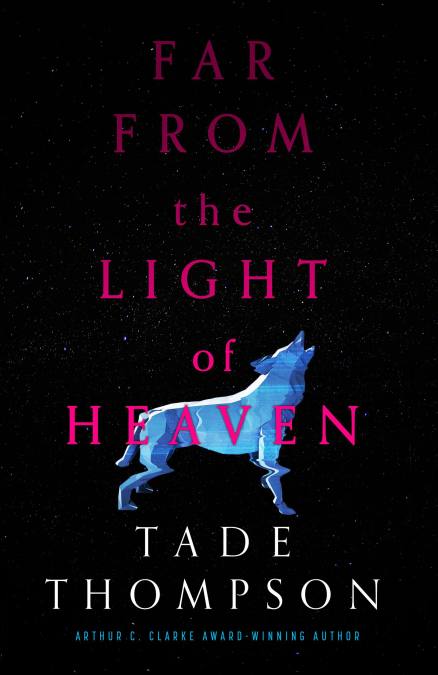
BOOK REVIEW: Far from the Light of Heaven by Tade Thompson


Far From The Light of Heaven is my first Tade Thompson book. Thompson is a Nigerian-British author best known for the Wormwood Trilogy featuring the books Rosewater, The Rosewater Insurrection, and The Rosewater Redemption. He won the Arthur C. Clarke award for Rosewater in 2019. This series is set in Nigeria in 2066 and is often referred to as part of the Afrofuturism movement.  I have only read a few Afrofuturism books (Lagoon by Nnedi Okrafor comes to mind) but so far I haven’t been that impressed (although I am a big fan of N.K. Jemisin's award-winning Broken Earth trilogy). The description of Rosewater as genre mashup of “Africanfuturism, cyberpunk, biopunk, Afropunk, zombie-shocker, [and] love story” is not appealing to me so I haven’t read it yet, although I do typically like genre mash-ups (like the apocalyptic police procedural The Last Policeman by Ben Winters). However, Far From The Light of Heaven piqued my interest when I saw the official summary for the book:


The colony ship Ragtime docks in the Lagos system, having traveled light-years to bring one thousand sleeping souls to a new home among the stars. But when first mate Michelle Campion rouses, she discovers some of the sleepers will never wake.


Answering Campion’s distress call, investigator Rasheed Fin is tasked with finding out who is responsible for these deaths. Soon a sinister mystery unfolds aboard the gigantic vessel, one that will have repercussions for the entire system—from the scheming politicians of Lagos station, to the colony planet Bloodroot, to other far-flung systems, and indeed to Earth itself.


From this we can tell that there are two primary protagonists in the story, Rasheed and Michelle (Shell). We are introduced to Shell first, meeting her on Earth even before she boards the Ragtime as first mate. Surprisingly, even though we meet Rasheed last, I identified with him more than her.


Their motivations for why they act the way they do in response to the extraordinary series of events that befall them on Ragtime are very different from each other. Shell is responsible for the welfare of the one thousand passengers in suspended animation and is shattered that 31 of them have been dismembered on her watch (even though it happened while she was sleeping for 10 years like all the other humans on the spaceship). But (somewhat bizarrely, I think) she insists on maintaining her exercise and sleep schedule while the ship (especially the A.I. which is the actual captain of Ragtime) becomes more and more erratic. In the end, I didn’t really connect with Shell or empathize with her. Rasheed on the other hand we are introduced to with the context that he has a problematic incident in his past that involves an on-duty killing of an alien. He's the assigned investigator to the incident on the ship and he’s single mindedly focused on discovering who committed the murders (even when paying more attention to surviving his time on Ragtime becomes more and more urgent). I was more interested in what happens to him (and his partner Salvo, a humanoid android or Artificial). 


There are other important characters in the book but I don’t want to mention them because to do so would reveal spoilers. However, I will say one strength of the book is the diversity of its characters. As a mystery-science fiction genre mashup, Far From The Light of Heaven works much better as science fiction than as mystery. We do find out who committed the crime(s) but there’s really no way we could have figured it out from the information provided to the reader.


Overall, I am glad that I read Far From The Light of Heaven although I don’t think it’s outstanding or very memorable. That’s fine, not everything has to be a barn burner or award-winning. An entertaining genre novel with a diverse cast and a vision of the far future that is centered around the existence of black people (or people of African descent) is a net good in of itself, in my view.

Title: Far From The Light of Heaven.
Author: 
Tade Thompson.
Format: Kindle.
Length: 385 pages.
Publisher: Orbit.
Date Published: October 26, 2021.
Date Read: December 19, 2021.

GOODREADS RATING: ★★½☆  (3.5/5.0).

OVERALL GRADE: B+ (3.33/4.0).

PLOT: B+
IMAGERY: B.
IMPACT: B+.
WRITING: A-.

Thursday, May 13, 2021

BOOK REVIEW: The Fires of Vengeance (Burning, #2) by Evan Winters


The Fires of Vengeance by Evan Winter is the sequel to the author’s debut novel The Rage of Dragons. These books are firmly in the category of epic fantasy: they are both chockfull of dragons, swords, metaphysical powers, gods and warfare. The books are set in something resembling a Bronze Era civilization, with a strict caste-based society that appears to modeled on an ancient African culture. Winter is one of the very few African-American writers working in this genre and he makes it very clear that the characters in his books are primarily what we could call “people of color” with skin tones of various hues from very light brown (tea with lots and lots of milk) to the darkest black (fire-scorched wood).

The main character in the series is Tau Solarin, who in The Rage of Dragons had a fairly familiar plot of the lowly outsider underdog who eventually becomes a celebrated champion after overcoming multiple trials and tribulations. In The Fires of Vengeance, Tau’s developing relationship with his Queen, Tsiora Omehia, becomes one of the primary threads of the complicated plot. In addition to this romantic intrigue plot line, the story in the second book also includes political intrigue between Tsiora and her sister Esi who has claimed she is the rightful claimant to the throne and the intercultural intrigue of the ongoing disintegration of the Omehi caste system. However, all of these other threads are overshadowed by the imminent battle between the Omehi people and the more populous indigenous inhabitants of the Xidda continent. And in addition to the struggles between different factions of the Omehi and the future struggle between the Omehi and Xiddans , there’s a non-negligible threat from the Cull, the near-omniscient murderous beings who drove the Omehi from their ancestral land of Osonte, decimating them in the process. It was that fabled escape from Osonte, dozens of generations before the events told in The Burning books that caused the Omehi to arrive to Xiddan and displace the indigenous folks on the peninsula, who unsurprisingly view them as colonizing marauders who should be exterminated.The Omehi feel like the Xiddan pensinsula is overrun by godless, murderous heathens who don't deserve to occupy the land their forefathers fought and died for so the stage is set for genocidal war.  Because its been so long, many Omehi don’t even think The Cull are real (which is a dead giveaway that at some point these Big Baddies are gonna show up at some point!)

A key feature of the books is the existence and prominence of Isihogo, the Underworld, where time runs faster than the real world and where the power of gods and demons manifest themselves. Generally, only priestesses with a rare ability and years of training are able to enter Isohogo but Tau has been using it as a means to hone his fighting skills to the point where he is the best fighter the Omehi have seen in generations, perhaps ever. (When you get killed by Demons in the spirit world it doesn’t physically harm you and you wake up back in the real world with the memory of what happened; many people can become susceptible to emotional and mental damage from the experience. Because Tau is fueled by a volcanic level of rage and vengeance he thinks that the costs, such as the hallucinations he regularly suffers, are worth the enhanced fighting prowess and imperviousness to pain he gains.)

As I mentioned, Omehi society is strictly caste-based, with two primary groups, Nobles and Lessers. The author is somewhat vague about whether the castes are actually biologically distinct, or whether, like race, the caste divisions in Omehi society are socially constructed identities reified by cultural norms and historical tradition. Nobles are generally larger, faster and stronger than Lessers, but a key point we learn in the first book is that the two groups can procreate with each other (although of course this is strongly discouraged). There are various strata in both of the two primary castes, with the absolute lowest being “Drudges” who are basically outcasts from Lesser society and the highest are the Royal Nobles, which includes Tsiora. In both books, one of the central fights Tau has to take on is the assumption that as a Lesser he has no chance of besting a Noble (of any level) in combat. This of course turns out to be spectacularly untrue and is the primary plot device of The Rage of Dragons. However, we do learn in The Fires of Vengeance that Nobles have stronger connections Isihogo which may account for their advantages (and also would tend to lend credence to the idea that the caste divisions are “real”). However, like race, just because one group of people who are racialized into a particular group tend to have more or less of a particular trait or tendency does not mean that race is not a fiction. The clever and conspicuous depiction and deployment of race is one of the most attractive features of the series for me, especially since any depiction of difference from a white heteronormative ideal is so rare in most fantasy and science fiction.

Although the two books share numerous similarities (depiction of multiple battles and one-on-one skirmishes, political and romantic intrigues, cultural/ethnic stereotyping and demons, dragons and disasters, oh my!) The Fires of Vengeance improves on The Rage of Dragons by de-centering Tau slightly and making it clear that two of the most important characters from the first book are both gay (and a couple!). Of course, Tau in his single-minded focus on getting revenge for the deprivations he suffered in the first book is one of the last to figure out the situation but he takes it completely in stride. As a gay reader of the books, the complete absence of homosexuality in the all-male military settings of the first book was a curious and problematic defect that I’m very happy was corrected in the second book.

I suppose one of the (slight) quibbles one could have with The Fires of Vengeance is that it doesn’t resolve most of the larger tensions in the plot and ends with the inclusion of a huge, paradigm-shifting twist. That said, there’s a lot that does happen in the second book of The Burning, with multiple significant characters dying and/or having life-altering consequences due to the action. Winter is not one to provide his characters with plot armor, which is a refreshing change.  Apparently the series may become a quartet instead of the expected trilogy, which is fine by me, because The Burning is fast becoming one of my favorite epic fantasy series. For people who like the work of Brent Weeks (Lightbringer series, Night Angel trilogy) and Peter Brett (Demon Cycle) I’m confident you will also enjoy these action-packed, engaging books by Evan Winter!

Title: The Fires of Vengeance (The Burning, #2).
Author: 
Evan Winter.
Format: Kindle.
Length: 528 pages.
Publisher: Orbit Books.
Date Published: November 10, 2020.
Date Read: May 2, 2021.

GOODREADS RATING: ★★  (4.0/5.0).

OVERALL GRADE: A- (3.67/4.0).

PLOT: A-.
IMAGERY: A-.
IMPACT: A-.
WRITING: A-.

Monday, August 20, 2018

2018 HUGOS: Jemisin Completes Historic Trifecta With 3rd Consecutive Best Novel Win


She did it! N.K. Jemisin won her third consecutive Hugo award for Best Novel, science fiction's most prestigious honor, for The Stone Sky, the third book in the Broken Earth trilogy. Jemisin became the first African-American woman to win the Hugo award for best novel in 2016 for The Fifth Season and after she repeated this feat in 2017 with The Obelisk Gate there was great suspense as to whether the Broken Earth trilogy would become the first science fiction trilogy where every entry won the Hugo award when nominations were announced earlier this yearOrson Scott Card (Ender's Game, Speaker for the Dead) and Vernor Vinge (A Deepness in the Sky, A Fire upon the Deep) each have won 2 Hugos for the first two entries in a series and Connie Willis and Lois McMaster Bujold have each won 3 Hugos for books in a series.

Here is her incredible acceptance speech


Amazing news!

Sunday, April 01, 2018

2018 HUGO Awards: Nominations Announced


The nominations for the 2018 Hugo Awards were announced on Saturday March 31. The picks for Best Novel is the category I really only follow and care about. The nominees are:
Best Novel
  • The Collapsing Empire, by John Scalzi (Tor)
  • New York 2140, by Kim Stanley Robinson (Orbit)
  • Provenance, by Ann Leckie (Orbit)
  • Raven Stratagem, by Yoon Ha Lee (Solaris)
  • Six Wakes, by Mur Lafferty (Orbit)
  • The Stone Sky, by N.K. Jemisin (Orbit)
Last year, N.K. Jemisin won this award for the second consecutive year for the second book in her Broken Earth trilogy, The Obelisk Gate. She previously won the award for the first book in the series, The Fifth Season, in 2016. It is very possible that she could win the award for the third book in the series, The Stone Sky, this year.  I think that would mean she would become the first author to have all three books in a trilogy win speculative fiction's most prestigious honor.

Of the other books she is competing with Scalzi, Leckie and Robinson have all won Best Novel Hugo awards before, with Leckie probably being the biggest threat to Jemisin since all three books in her Imperial Radhch series were nominated for Best Novel (although only the first, Ancillary Justice, went on to win the 2014 Hugo award). Provenance is set in the same universe as those books but has not been as universally celebrated as the Ancillary novels. I do intend to read it eventually but haven't felt an urgent need to do so. Lots of people are very high on the work on Yoon Ha Lee but I tried the first book in the series, Ninefox Gambit, and found it almost unreadable. 

I read Scalzi's The Collapsing Empire, and while it is amusing in parts it is nowhere as diverting or enjoyable as his Hugo-award-winning Redshirts, but his work is very popular. The reviews for Robinson's 2140 were similarly not kind, and I don't really intend to read it. I do intend to read Six Wakes, because it is a genre mashup of murder-mystery and science fiction.

The winners will be announced at Worldcon which is being held in San Jose, California August 16-20, 2018.

Thursday, September 28, 2017

BOOK REVIEW: The Stone Sky (The Broken Earth trilogy, #3) by N.K. Jemisin


The Stone Sky is the third and final book in N.K. Jemisin's award-winning Broken Earth trilogy. The first two entries, The Fifth Season (see my review) and The Obelisk Gate (see my review), each won the Hugo award for Best Novel the last two years, against very stiff competition, it must be noted. Can the third one also do it, giving Jemisin an unprecedented trifecta of Hugo wins? It's very possible, because the third book is at least as good as the first two. I would say that the first one would be my personal favorite of the three, primarily due to the novelty of the world Jemisin creates and the interesting literary device that she uses to entice the reader which pays off extremely well around three-fourths of the way.

The first book revolves around the central character, Essun, trying to find her daughter, Nassun, who has been taken away by her husband Jija after he killed their youngest child because he discovered that his wife (and thus his children) are orogenes, people who have the power to affect their surroundings by manipulating energy (in basically all its forms) with their minds and bodies. Unfortunately, this ability is often only partially under conscious control and very often orogenes will unintentionally slaughter the people around them, either through boiling or freezing them to death (by suddenly changing the amount of heat in a proximal volume of space), or causing catastrophic earthquakes. The social stigma against orogenes is so intense that Jija kills his own son and kidnaps his daughter after he discovers his wife is an orogene when she uses her powers to save the village the family had lived in as a cataclysmic event occurs which will (again) throw their entire society into turmoil. Cataclysmic events are somewhat expected in this version of Earth. So much so that these events are known as "seasons," and most people live in a state of readiness that a life-shattering event could happen at any time. 

The second book follows the story of Essun as she tries to survive the aftermath of the events of the first book, while simultaneously trying to locate the surviving members of her family, Nassun and Jija. Survival takes priority, as the effects of the Season become more serious (the sun is blotted by the ash in the sky and earthquakes and tidal waves destroying coastal cities become commonplace). Essun finds a community (located underground in a geological oddity called a geode) where orogenes are not as stigmatized (in fact they are valued) and settles in with them.

In the third book, the story primarily focusses on Nassun and Essun. Nassun was taken by her father to a community run by guardians (creatures that have the power to train, control and punish orogenes) where they try to cure orogene children like her. Essun has been able to use the Obelisk Gate to locate Nassun, so she knows her daughter is alive, but the consequences of her actions (which she took to try and save the society she had joined from attack by others) are physically damaging and potentially life-threatening. Interestingly, we not only follow Nassun and Essun's story in The Stone Sky, we also get the back story of one of the mysterious (and initially terrifying) creatures called the stone eaters.

With The Stone Sky (and really with the entire series) Jemisin is deconstructing and inverting, while simultaneously deploying, many of the classic tropes of epic fantasy. There is a main character (who in this case happens to be female and dark skinned, with dread locks) who goes on a quest (to find her daughter) and finds out that she has more power than she ever believed she had. This is a familiar plot summary that we have seen many times before. But unlike most epic trilogies, things don't end up "happy ever after" for our hero in the Broken Earth trilogy. She doesn't get to sail off to the Undying Lands like Frodo in The Lord of the Rings. Happily, Essun's (and Nassun's) story is resolved without ambiguity (something that I wish Richard K. Morgan's otherwise excellent epic fantasy trilogy featuring an openly gay protagonist, A Land Fit For Heroes had done). 

Overall, I would say that the Broken Earth trilogy is simultaneously similar to many other fantasy trilogies while distinguishing itself in ways that make it something that is ultimately memorable and also unlike any other fantasy trilogy that you have ever read before, while wishing you could read many more like it.


Title: The Stone Sky.
Author: 
N.K. Jemisin.
Paperback: 413 pages.
Publisher:
 Orbit.
Date Published: August 15, 2017.
Date Read: September 5, 2017.

GOODREADS RATING:  (4.0/5.0).

OVERALL GRADE: A/A- (3.83/4.0).

PLOT: A.
IMAGERY: A-.
IMPACT: A-.
WRITING: A.

Saturday, August 12, 2017

2017 HUGO AWARDS: Jemisin Wins 2nd (Consecutive) Best Novel Award


The 2017 Hugo awards were announced last night in Helsinki, Finland and N.K. Jemisinlast year's winner for The Fifth Season, won again, for the second book in her Broken Earth trilogy, The Obelisk Gate. Jemisin, who last year became the first African-American woman to win the prestigious best novel award, has now won two in a row, the first time that has happened since Lois McMastr Bujold won in 1991 and 1992 for two entries in her longrunning Vorkosigian saga, which won the new category of Best Series this year.

When I looked at the Hugo award nominations for Best Novel this year, my choice for the win would have been Cixin Liu's At Death's End. However, Jemisin would probably be my second choice, so this is a happy result! Jemisin was not present in Helsinki to accept her award, so my childhood friend, Dr. Karen Lord, a successful science fiction writer in her own right, accepted on her behalf (see picture at the top of this post)!

Book 3 in Jemisin's Broken Earth series, The Stone Sky, will be released on Tuesday August 15.

Wednesday, April 05, 2017

2017 HUGO AWARDS: Nominations Announced


The finalists for the 2017 Hugo Awards were announced yesterday. In the category of Best Novel, the nominations are:

Best Novel (2078 ballots)

  • All the Birds in the Sky by Charlie Jane Anders (Tor Books / Titan Books)
  • A Closed and Common Orbit by Becky Chambers (Hodder & Stoughton / Harper Voyager US)
  • Death’s End by Cixin Liu (Tor Books / Head of Zeus)
  • Ninefox Gambit by Yoon Ha Lee (Solaris Books)
  • The Obelisk Gate by N. K. Jemisin (Orbit Books)
  • Too Like the Lightning by Ada Palmer (Tor Books)
Last year's winner was N.K. Jemisin, for The Fifth Season, the first book in her Broken Earth trilogy, which continues with The Obelisk Gate. That, and Death's End, the third book in Cixin Liu's Remembrance of Earth's Past trilogy which began with the Hugo-award-winning The Three-Body Problem, are the only two books on the list I have read. I tried to read Ninefox Gambit  and couldn't get past the first chapter. I read the first book by Becky Chambers, The Long Way to a Small, Angry Planet but it didn't engage me enough to have a strong desire to read the sequel.

Charlie Jane Anders is probably the first transgender author to be nominated in this category but I don't really have an interest in reading All The Birds in the Sky, which is apparently about debates between science and magic and childhood. Too Like the Lightning is in my burgeoning TBR pile, but people seem to love or hate this ambitious work.

If I had a vote, I would probably pick Cixin Liu's Death's End, as an awesome end to an awesome hard sci-fi trilogy. We will get the results in late August, at Worldcon 75 in Helsinki, Finland.

Thursday, March 02, 2017

2017 NEBULA AWARDS: Nominations Announced


The Nebula awards are one of the most prestigious awards in the genre of speculative fiction. The winners are voted on by members of the Science Fiction Writers of America (SFWA), who are generally people who have published works of science fiction.

Last year's winner for Best Novel was Naomi Novik's Uprooted which was also nominated for the Hugo award, an award which is voted on by people who register for the World Science Fiction convention (WorldCon).

This year's nominees for best novel are:
Novel
Unfortunately I have only read one of these books N.K. Jemisin's The Obelisk Gate (which I quite enjoyed) and is the sequel to her Hugo award-winning The Fifth Season (which I liked even more).

Wednesday, December 21, 2016

BOOK REVIEW: Uprooted by Naomi Novik


I'm glad I finally read Uprooted by Naomi Novik (primarily best known for her best-selling Temeraire series set in an alternative Napoleonic past that features telepathic dragons), especially after hearing about its many award successes and plaudits received all year long. (Uprooted won the 2016  Nebula award for Best Novel and was nominated for the Hugo award and Locus award.)

Uprooted is a pretty traditional fantasy novel. It is the story of Agnieska, a simple country girl who lives in a small village located near a dangerously enchanted Wood. Nieshka's village is guarded by The Dragon, an old Wizard who selects a girl from the local village every 10 years as payment for his protective services of the people who live in the environs of the Wood. Everyone expects that Agnieska's best friend Kasia will be chosen by the Dragon but (unsurprising, at least to me) he chooses Nieshka instead.

There is a lot of magic in Uprooted, as we discover that the reason Nieshka was selected is that she is an untrained Witch. (Of course she is. As usual, it just so happens that our main character just happens to have untapped resources of power  waiting to be developed and acknowledged. Isn't this the basic plot of every Marvel movie released in 2016?) There's also a lot of battles and a (surprisingly) large amount of death. The stakes are real for the people in the book.

As you might have been able to tell from my parenthetical comment above, one of the main faults of the book (to me) was the inclusion of too many clichéd fantasy tropes. Here is just an abbreviated list: young inexperienced farm girl, person who discovers they have powerful magic abilities, the palace intrigue, the very small village the main character comes from, the fish out of water scenes when the rube goes to the capital city, the battle of magicians, the ancient evil of the enchanted forest, the siege of hero by a numerically superior armed force, et cetera.

For lots of other people they may have gained comfort from the familiarity of these tropes but to me they were mostly just annoying. I like fantasy "well enough" but it's not my go-to genre. Examples of fantasy I have read relatively recently that I enjoyed quite a bit would includes works by Brian Staveley, Michael J. Sullivan, Robert Jackson Bennett, Daniel Abraham and N.K. Jemisin. Those books include lots of suspense, action, wonder (sometimes humor and often diversity), built around complex, memorable characters. These books use and then disrupt fantasy tropes. To me, 
Uprooted also uses fantasy tropes and perhaps is trying to invert them in some way but mainly ends up re-inscribing them. There is definitely action and suspense in Uprooted but I simply did not care about either of the two central characters and it is definitely lacking both a sense of fun and a diverse perspective. Additionally, I was almost driven to distraction by the young adult (YA) romantic scenes of "tension" between the young, inexperienced girl and older, emotionally distant, experienced magician.

However, overall I would still say that Uprooted is a well-crafted, quite traditional fantasy novel brimming with magic and mayhem, with a somewhat bewildering ending that simply failed to resonate with me.


Title: Uprooted.
Author: 
Naomi Novik.
Paperback: 464 pages.
Publisher:
 Del Rey.
Date Published: March 1, 2016.
Date Read: August 8-13, 2016.

GOODREADS RATING:  3.5 STARS. (Rounded down for the nearly incomprehensible but unfortunately mawkish ending.)


OVERALL GRADE: A- (3.67/4.0).

PLOT: A-.
IMAGERY: A-.
IMPACT: B+.
WRITING: A.

Thursday, December 08, 2016

BOOK REVIEW: The Obelisk Gate by N.K. Jemisin


The Obelisk Gate is the sequel to the Hugo award-winning The Fifth Season, which overall I found difficult but after forcing myself to finish, I admired for its complexity, diversity and cleverness

Sadly, The Obelisk Gate still has the complexity (or a better term might by lexical density) of its predecessor but both the diversity of characters and cleverness of execution appears to be diminished in  this sequel to The Fifth Season. However, both books do share the ineffable quality of a good read: compulsion of the reader to want to find out what happens next.

One of the main problems I think the books have is that they are set in a world that Jemisin calls "The Broken Earth" where basically calamity is commonplace and even expected. Disasters happen, on the regular. These apocalyptic events are called seasons in Jemisin's creation. (I'm still not exactly sure what a "FIFTH season" is because there appear to be a lot more than four seasons described in the must-read appendix.) 

Instead of the story being told from three perspectives and time lines that eventually are weaved together (like in The Fifth Season), in The Obelisk Gate we primarily follow two distinct tales, one about what happens to Essun and the other about what happens to Nassun, her daughter. The first book was nominally about tracing Essun's journey as she searches for Nassun. The second book reveals what happened when Nassun fled with her murderous father Jija to a place he thought could/would/should cure his daughter so that he wouldn't murder her (for being a despicable orogene like her mother). 

Jemisin does an excellent job of depicting the ambivalence of contradictory feelings between Jija and Nassun, who both hate and love each other. It's not really too much of a surprise to discover that by the end of The Obelisk Gate  only one of them survives. (And it's not that much of a surprise to discover which one it is.) Jemisin also shows contradictory emotions in the relationship between Scaffa, who is a guardian (someone who hunts/controls/kills orogenes) and Nassun, who is an orogene (someone who can redirect the kinetic, thermal, potential energy of the world).

Orogenes are despised and feared in the society the Broken Earth trilogy is set in but also are very powerful and useful to have around when the world is falling apart. Essun, who is a very, very powerful orogene, gets a first-hand look at how a society can simultaneously desire and despise an entire class of people (orogenes) as she hunkers down in Castrima, an amazing underground cavern where she is relatively safe from the desolation and havoc occurring on land.

This all sounds interesting, and it is (in theory), but I wanted more story in The Obelisk Gate. There's not a lot that actually happens, to either Nassun or Essun, and because they are physically located only two locales for most of the book there is much less world-building in this book than there was in the first. (This is not too surprising since it is the middle book of a trilogy after all.) 

Happily, this time I did not have as much trouble finishing the book (there was never a time I thought "I really don't want to read this anymore") but there are passages of Jemisin's writing that still make my eyes itch. I am pretty sure that I will read the third book, mostly for completeness and out of a dutiful sense of finishing what you start (and yes, that curiosity of wanting to find out what happens next).

Overall, The Obelisk Gate is a worthy sequel to the award-winning The Fifth Season as it continues the story of what happens to Essun as her world falls apart after a personal and actual cataclysmic event.

Title: The Obelisk Gate (The Broken Earth, #2)
Author: 
N.K. Jemisin.
Paperback: 448 pages.
Publisher:
 Orbit.
Date Published: August 18, 2016.
Date Read: November 16, 2016.

GOODREADS RATING: 3.5 STARS.

OVERALL GRADE: A- (3.67/4.0).
PLOT: A-.
IMAGERY: A-.
IMPACT: B+.
WRITING: A.

Sunday, August 21, 2016

N.K. Jemisin Becomes First Black Woman To Win Hugo Award for Best Novel


Wow! Defying the predictions of most prognosticators, Nora Jemisin was the surprise winner of the 2016 Hugo Award for Best Novel for The Fifth Season. (See my A-/B+ review.) By my reckoning, Jemisin win is historic for multiple reasons: she's the first Black woman (and first Black person) to win science fiction's most prestigious award. And she did it after two years of intense debate (most of it online) in the speculative fiction community about the meaning, necessity and importance of diversity in the speculative fiction community. She also did it despite being nominated for (and losing) the Nebula award to Naomi Novik's Uprooted.

This is how The Guardian placed this year's awards in context with the ongoing Puppy fracas:
As in previous years, there had been attempts by two separate groups, the Sad Puppies and the Rabid Puppies, to “game” the awards in favour of their preferred slates of works. Both groups claimed that science fiction has become dominated by a liberal, left-wing bias. 
The Hugos are voted on by those who purchase an attending or supporting membership to either the current or previous Worldcon events. Eligible voters can tick the “No Award” box if they don’t agree with any of the shortlisted works, a tool which has been used to block out Puppies recommendations previously. In 2015, five No Awards were given, including for the prestigious best novella and best short story categories; an unprecedented number, as No Award had only been presented as many times in the entire history of the prize, which began in 1953. 
In contrast, this year there were only two No Awards, in the smaller best related work and best fan-cast categories.
However one of the key ironies (also noted by The Guardian) in Jemisin's win is that the primary rabble-rouser of the rabid puppies, Theodore Beale (a.k.a. Vox Day) had previously been expelled from the Science Fiction Writers Association after he called Jemisin an "educated but ignorant savage." The group of Rabid Puppies has been trying to destroy the Hugo awards, by exerting undue influence over the nominations and winners but Jemisin becoming the first Black woman to win the top prize is the clearest repudiation of the recent actions of Beale's Puppies to "make science fiction great again."

Thursday, August 11, 2016

BOOK REVIEW: The Fifth Season (Broken Earth, #1) by N.K. Jemisin


I almost gave up on N.K. Jemisin's The Fifth Season while reading the first fifty pages but, encouraged by the extremely positive reviews (rated over 4.3/5 by 7500+ people on Goodreads) and widespread critical acclaim (nominated for multiple awards like the Nebula and Locus) I persisted, and I'm very glad that I did. (This was not the case with Jemisin's The Hundred Thousand Kingdoms, which I gave up on rather quickly several years ago, and I don't regret that decision. That being said, having previously given up on a book of hers probably made me want to give The Fifth Season the benefit of the doubt. That and the fact that she, like me,  is on the side of the good guys in the Puppy brouhaha over representation in speculative fiction.)

The story follows three characters, Damaya, Essun and Syenite as they navigate their lives in a world which is accustomed to regular cataclysmic disasters, called a "Season." The world has gone through four of these events so far (each of which has been slightly different) and when the story begins it's not that obvious if the current situation is bad enough to be a fifth Season or not. The occurrence of catastrophes is so regular that the populace is always on edge, and prepared to flee at a moment's notice.

Related to the fact that earthquakes (called "shakes" in the book) occur so often is the existence of orogenes, people who have the power to manipulate the energy found in nature around them to move objects, freeze or heat the air and generally disrupt the world around them. One side effect is that without control, an orogene can remove all the energy from the volume of space "near" them, which can be fatal to anyone too close to the orogene. For this reason they are feared and hated by most civilized people, and hunted and controlled by another group called Guardians.

By following the stories of a young inexperienced orogene (Damaya), a mid-level orogene (Syenite) and an older, experienced orogene (Essun) the reader gets a multifaceted view of Jemisin's society, which is engrossing and diverse. The book is told via interspersed chapters following Damaya, Syenite and Essun (similar to George R.R. Martin's A Song of Ice and Fire and James S.A. Corey's The Expanse.)
I particularly liked Damaya's story the most and particularly looked forward to reading her chapters. I also appreciated the inclusion of an openly gay main character in the book (and there's a bisexual character and a transgender character that play pivotal roles later on). I was not prepared for the somewhat explicit sexuality between these characters, but it was handled well, and it was a plus for me. There is also clear descriptions of hair and body types which make it clear that the vast majority of the characters in The Fifth Season would be racialized as non-white in our world. And that gives me another way to connect with the book. That being said, although I was very interested to see where the story goes I was not actually enthralled with the book as a whole--it misses some elements (humor, suspense, wonder, that "wow" factor), but it is a well-written and intriguing read.

Overall, I'm glad I read The Fifth Season and I'm looking forward to reading the next two books in the The Broken Earth trilogy. The second book, The Obelisk Gate, is coming out next week, Tuesday August 16, 2016. (You can read the first chapter for free!)


Title: The Fifth Season.
Author: 
N.K. Jemisin.
Paperback: 468 pages.
Publisher:
 Orbit.
Date Published: August 4, 2015.
Date Read: January 26, 2016.

GOODREADS RATING: **** (4.0/5.0).

OVERALL GRADE: A-/B+ (3.58/4.0).

PLOT: A-.
IMAGERY: A-.
IMPACT: B+.
WRITING: A-.

Sunday, May 15, 2016

2016 NEBULA AWARDS: Naomi Novik's Uprooted Wins Best Novel In All-Female Sweep


The 2016 Nebula Awards for the best writing in science fiction and fantasy released in 2015 were announced this weekend and all of the winners in the main categories (Novel, Novella, Novellette and Short Story) were women!

Novel
  • Uprooted, Naomi Novik (Del Rey)
Novella
  • Binti, Nnedi Okorafor (Tor.com)
Novelette
  • ‘‘Our Lady of the Open Road’’, Sarah Pinsker (Asimov’s 6/15)
Short Story
  • ‘‘Hungry Daughters of Starving Mothers’’, Alyssa Wong (Nightmare 10/15)
Additionally, Fran Wilde's Updraft won the Young Adult Nebula award, i.e. Andre Norton Award for Young Adult Science Fiction and Fantasy. Mad Max: Fury Road deservedly won the Outstanding Dramatic Presentation category.

The big kahuna is the Novel category, and this year there are three books that have been nominated for both the Hugo and the Nebula: Naomi Novik's Uprooted (which I have not read yet and since I was not a fan of her Temeraire stories I may not get around to), Ann Leckie's Ancillary Mercy and N.K. Jemisin's The Fifth Season (both of which I have read). If I were voting, I would have picked Jemisin, and the SFF award prognosticator at Chaos Horizon did just that as well. However, we were both wrong. Does that mean Novik is now the front runner for the Hugo? I doubt it, but I do think it means that voters may not split as many votes among Leckie, Jemisin and Novik, which could make it harder for Neal Stephenson's Seveneves to win the award (which I think it is going to do).

Wednesday, May 04, 2016

2016 LOCUS AWARDS: Nominations Announced

The Locus Awards for Science Fiction and Fantasy Novel were announced this week. These awards are selected via an open online poll conducted by Locus magazine online between February 1 and April 15 every year.

This year there is a significant overlap between the Locus awards and the Hugo award nominations and the Nebula award nominations.

Ann Leckie's Ancillary Mercy has been nominated for the Locus, Hugo and Nebula. It is the third book in a series which began with Ancllary Justice which won every single possible science fiction award there is (Hugo, Nebula, Locus, Clarke and BSFA). Two other books which have also been nominated for the Hugo, Locus and Nebula are N.K. Jemisin's The Fifth Season and Naomi Novik's Uprooted.

Other notable books of 2015 include Neal Stephenson's Seveneves, which has been nominated for the Locus and Hugo, and Aliette de Bodard's The House of Shattered Wings which has been nominated for the Locus award and won the British Science Fiction Award.
SCIENCE FICTION NOVEL
FANTASY NOVEL

LinkWithin

Blog Widget by LinkWithin