Showing posts with label fiction. Show all posts

Thursday, January 25, 2024

BOOK REVIEW: Yellowface by R.F. Kuang

Yellowface is another literary blockbuster success written by R.F. Kuang, the author of the Hugo award-winning speculative fiction masterpiece Babel, or the Necessity of Violence: an Arcane History of the Oxford Translators’ Revolution (See my review) and The Poppy War trilogy. Yellowface won the Goodreads Choice award for Best Fiction in 2023, demonstrating Kuang’s widening appeal and increasing acclaim to the general public even before she has completed graduate school(!)

Yellowface is a story about writing, writers, and the never ending struggle between art and commerce. Kuang is especially skilled at selecting topics for her books that are likely to resonate with a significant segment of the book-reading (and book-buying) public. Babel is focused on the importance and nuance of words; etymological knowledge becomes a source of technological power through the application of fantastical magic. Unsurprisingly, the premise that the meaning and backgrounds of words themselves could be the central aspect of a plot was irresistible to many reader and literary critics alike.

In Yellowface, Kuang goes even further by centering the story around literary ambition itself, another thing that both readers and critics have in common. Many readers, and most (if not all?) critics have harbored secret thoughts of literary success. Another key ingredient of Yellowface is its self-conception as an expose, an insider’s view of the book industry itself. This is, of course, another subject that both readers and critics would find irresistible to consume. Yellowface is about two friends/colleagues/rivals who have a lot of similarities, but whose level of success and career trajectories (when we meet them at the beginning of the book) are very dissimilar. Juniper (June) Song is the primary protagonist  whose first-person perspective we get throughout the novel while Athena Liu is her frenemy (friend/enemy) who seems to effortlessly outshine June in every way that matters. Athena and June are both young authors who have written and published their first books, to wildly different responses from the public. Athena and June attended the same prestigious college, and ran in similar circles since they had similar interests and ambitions (literary success). However, Athena published her first novel while still in college, obtaining a prestigious literary agent and book deal. June also finished her first book in college and got an agent (and far less lucrative) book deal. 

Yellowface’s most important moment happens quite early in the book. While Athena and June are socializing (in Athena’s fabulous apartment in Washington, DC), celebrating Athena’s completion of her latest novel when Athena chokes and dies in a freak accident. (The incident is told from June’s perspective and makes it somewhat ambiguous whether June could have been more active in trying to save her “friend.” What happens next is not in doubt, however. June takes the only existing copy of Athena’s completed manuscript home with her. After a few days she takes it out and starts to edit it and check and augment the historical details included in the book. Athena’s novel was a surprising departure from her previous work; it’s a historical novel, about a little-known incident from World War I involving Chinese laborers. There’s also an interracial love story. Eventually, June decides to submit the work to her usually unenthusiastic agent, passing it off as her own. Of course, everyone loves the book, even though they are somewhat surprised that June could (and would) write something like this. June is white, and Athena is Asian-American, so questions of authenticity become raised almost immediately, internally within June’s literary agency and externally from fellow writers who knew both Athena and June, some who are still reeling over the sudden tragic death of Athena, and are extremely suspicious of June’s bona fides to publish a book about this topic.

However, what happens next is something of a slow-moving horror story. As the book becomes more and more successful, scrutiny about the provenance of the work is also heightened. Kuang skillfully shows how social media and word-of-mouth (i.e. gossip) operate within literary circles, especially in her depictions of the sometimes cozy and somewhat incestuous relationship between authors, critics, publishers, promoters and bookstores.

The ending of Yellowface is somewhat anticlimactic. Unsurprisingly, as the tension of the plot ratchets up higher and higher eventually something breaks, but in a way that is not as compelling as the setup of the story. Overall my impression of the book are generally positive but I definitely would not have voted for it as the best fiction book of 2023. Regardless, it’s clear that Kuang is an author on the rise, and I look forward to reading her future work.

Title: Yellowface.
Author: R.F. Kuang.
Format: Kindle.
Length: 336 pages.
Publisher: William Morrow.
Date Published: May 25, 2023.
Date Read: November 9, 2023.

GOODREADS RATING: ★★★☆☆  (3.0/5.0).

OVERALL GRADE: B+/B (3.16/4.0).

PLOT: B+.
IMAGERY: B.
IMPACT: B+.
WRITING: B.

Friday, January 07, 2022

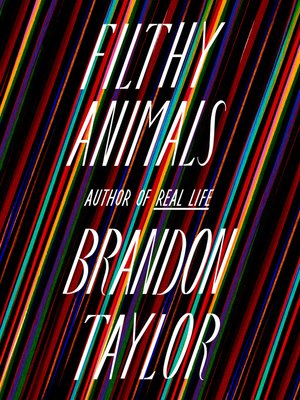
BOOK REVIEW: Filthy Animals by Brandon Taylor

Filthy Animals is a collection of short stories by Brandon Taylor, the author of the critically acclaimed debut novel Real Life. Real Life is about a Black, gay graduate student in a STEM discipline navigating his personal and professional life in a predominantly white, midwestern University town. Taylor drew upon his own experience as a graduate student in biochemistry at University of Wisconsin at Madison to provide a disturbingly real depiction of what it looks like to be “the only one” in multiple different settings that revolve around academia. As someone who has been in similar situations for nearly 35 years (gulp!) to say I resonated with multiple aspects of the novel is to put it much too mildly.

Filthy Animals is both a very similar and a very different book than Real Life. Firstly, it is a collection of loosely connected short stories instead of a novel. Also, both works are centered around the experiences of outsiders in familiar (at least to me, as a professor and dean) academic settings. However, in Filthy Animals the characters in each story change. The short collection (278 pages) consists of 11 stories; five of which (“Potluck,” “Flesh,” “Proctoring.” “Apartment,” and “Meat”) feature three recurring characters I would gladly read an entire book about. They are Charles, a white, muscular, apparently bisexual, twenty-something dancer; Lionel, a Black, gay, mathematics graduate student who struggles with mental health and self-harm ideations; and Sophie, a ethnically ambiguous, highly talented dancer who is in an open relationship with Charles. The stories where Sophie, Charles and Lionel appear are the most compelling in the collection as their foibles get revealed while they interact with each other in surprising ways.

The one-off stories have their own appeal as well. Taylor is almost always presenting characters who demonstrate the different ways one can be isolated or marginalized in society. In several of the stories the protagonist is damaged, injured or sick in some way. (They are often, but not always, gay.) For example, the titular story “Filthy Animals” is a rather disturbing tale about a somewhat feral group of teenage boys who apparently have nothing better to do than accost each other, using sex, violence and sexual violence as a means to relate to one another.

Overall, I think I was less engaged with Filthy Animals than with Real Life so I hope that Taylor returns to novel writing soon. This is not to say that one of the books is objectively “better” than the other. That said, I am glad to see someone with experiences and identities so similar to mine producing such well-received writing. I look forward to reading more of it.

Title: Filthy Animals.
Author: 
Brandon Taylor.
Format: Hardcover.
Length: 288 pages.
Publisher: Riverhead Books.
Date Published: June 22, 2021.
Date Read: December 27, 2021.

GOODREADS RATING: ★★★★☆  (4.0/5.0).

OVERALL GRADE: A- (3.67/4.0).

PLOT: B+.
IMAGERY: A-.
IMPACT: A.
WRITING: A-.

Thursday, September 02, 2021

BOOK REVIEW: Circe by Madeline Miller

Circe by Madeline Miller is another one of her amazing novelizations of the life of a famous (or infamous) character from Greek mythology. I had previously read The Song of Achilles, a heart-wrenching book about the most famous tragic gay love story of antiquity, that of Achilles and Patroclus (told mostly from the perspective of the latter). While The Song of Achilles can be described as a gay male equivalent of a “bodice ripper” (“jockstrap stretcher”?), featuring one of the most celebrated heroes of all time, Circe is about a less well-known and decidedly less well-regarded antihero. The genius of Miller is that she uses the protagonists of her books and their interactions with the Greek pantheon to depict mythological stories and legends as real events and occasions in the lives of her characters. Because her research is impeccable and her knowledge of the mythology is so vast, Miller is able to weave stories that readers have heard of together with others that we haven’t into a seamless, compelling whole that is educational, emotive and engaging.

All I remember knowing about Circe before reading Circe is that she was a sorceress (i.e. witch!) who turned Odysseus’ men into pigs after they landed on her island when they were sailing back from the Trojan War. She and Odysseus “hooked up” and this delayed his return to his long-suffering wife Penelope by several years. While all of that is known, Miller starts her story of Circe’s immortal life much earlier, informing us of her subject’s relationships to the more central gods of Greek mythology. Circe was the daughter of Helios, the Titan god of the Sun. The Titans, you may or may not remember, were the primordial gods who existed before the Olympians. They were led by Cronus (who had taken over by killing his father Uranus) and thus tried mightily to prevent the same thing happening to him by swallowing and imprisoning all the children he had with his fellow Titan, Rhea. However Rhea helped her favored son Zeus escape this fate and so it did come to pass that eventually Cronus’s son did usurp his father to become the King of the Gods and ruler of Olympus after the Olympians won a Great War with the Titans. The point of this background is to put Circe’s life in context; she was the daughter of a defeated Titan (Helios) and a sea nymph (Perses) who was always in the shadow of the now-ascendant Olympians and also her (evil) elder twin siblings Aeëtes and Pasiphaë. So although Circe grew up in godly dominions and in proximity to divinity she was only a demigod herself and even her godhood was of a secondary nature, since it was from a Titan, not an Olympian. In other words she was always  perceived (and perceived herself) as an outsider.

Early in her life, Circe discovers that she has powerful magical abilities through the use of herbs and incantations. Unfortunately, at a young age she uses these powers to break an important rule, by elevating a mere mortal she has a crush on to become a god (a status higher than she herself has) and turning a rival of hers into a horrible monster. When her bad behavior was revealed, an agreement was reached between Helios and Zeus to punish her by exiling her to a private, remote (but verdant) island for the rest of her very long life. 

Miller provides us context and rationale for Circe’s actions, so the reader begins to understand why she does some of the objectively horrible things she does. We also learn more about her siblings, and they are most definitely even worse. Her sister Pasiphaë births the monstrous Minotaur of Crete (after having sex with her husband's prized bull and gets a dispensation from their father to let Circe be released from her island exile to act as her sister’s midwife). Her brother Aeëtes committed murderous atrocity after murderous  atrocity to protect the Golden Fleece well before Jason and the Argonauts show up. I don’t think Miller excuses Circe’s bad actions, exactly, but we definitely learn Circe’s side of the story, especially in the most well-known tale involving her, namely that of her relationship with Odysseus and their son Telegonus.

Overall, the experience of reading Miller’s Circe is highly recommended for anyone who ever spent time in a library researching the various lives and family trees of the Greek and Roman gods. It’s an engrossing and enjoyable way to experience mythology. 

Ultimately, if you have already read The Song of Achilles then Circe compares somewhat unfavorably with that masterpiece, but there’s very few books that don’t. (If you haven’t read The Song of Achilles yet, what are you waiting for, a sign from the gods? Get to it!) That said, Miller does as good a job as one can do with an antihero like Circe as protagonist. I can’t wait to read whatever story/tale/myth she decides to tell an entire book about next!

Title: Circe
Author: Madeline Miller.
Format: Kindle.
Length: 433 pages.
Publisher: Little, Brown and Company.
Date Published: April 04, 2018.
Date Read: July 29, 2021.

GOODREADS RATING: ★★★★★  (5.0/5.0).

OVERALL GRADE: A- (3.67/4.0).

PLOT: A-.
IMAGERY: A-.
IMPACT: B+.
WRITING: A.

Thursday, May 06, 2021

BOOK REVIEW: On Earth We're Briefly Gorgeous by Ocean Vuong

On Earth We're Briefly Gorgeous is a famous book that has received substantial acclaim and recognition, especially for the beauty and emotional resonance of its prose. The book is written primarily in the first person as a letter to the author's mother, from an openly gay man who has been nicknamed Little Dog. The two have a complicated relationship, and the book documents the difficult life the two spent together as well as the how the war-torn country of Vietnam has impacted the author's mother as well as her mother (Little Dog's grandmother). 

I finally read this book because it was under consideration to be selected as a community read. Very early in the book it becomes clear that the themes of the book are very adult and that it includes scenes and depictions of events that might be triggering to some readers who have experienced various kinds of trauma. For example, the son describes multiple times that he is physically assaulted by his mother, and punished in multiple ways that seem disproportionate for the infraction he may have committed. Little Dog also describes racist incidents that happen to him and his family members in Hartford, Connecticut where they live when he was young. It becomes clear that the traumas that his mother (Rose) and grandmother (Lan) have had a deleterious effect on their mental health.

One key plot thread of the book involves Little Dog's relationship with a local white kid named Trevor. When Little Dog is 15 and Trevor is 17 they meet working on a tobacco farm in rural Connecticut. They are the two youngest employees and thus they start hanging out together. Eventually they both realize that there's an attraction to each other, and though Trevor never articulates being gay, but the two boys have intimate sexual contact multiple times for the next several years. This section of the book was one of the highlights for me, but this is primarily because it depicts a realistic and rarely-viewed slice of gay life. Soon after they meet it becomes clear that Trevor is a fan of using various drugs, from alcohol, pot, cocaine and eventually heroin. Drug use was not a stranger to Little Dog, as several of his neighbors in his rough Hartford neighborhood had died of overdoses. So after Little Dog leaves Hartford and goes to New York for college it's sad but not surprising that we learn that Trevor has died as well.

Overall, On Earth We're Briefly Gorgeous is an engaging, troubling and memorable book. It's true that the writing is incredibly evocative (this is Vuong's first  book of fiction after becoming celebrated as a poet). The intersection(s) between the identities of Little Dog and of Ocean Vuong make it seem like the book is thinly-veiled biography, and this gives the work an extra frisson as well. In the end, though, I can't say I particularly enjoyed the book, although I am glad that I did read it.

Title: On Earth We're Briefly Gorgeous.
Author:
Ocean Vuong.
Format: Kindle.
Format: 256 pages.
Publisher: Penguin Press.
Date Published: June 4, 2019.
Date Read: April 20, 2021.

GOODREADS RATING: ★★★½☆  (3.5/5.0).

OVERALL GRADE: A (4.0/4.0).

PLOT: A-.
IMAGERY: A.
IMPACT: A+.
WRITING: A.

Thursday, April 29, 2021

BOOK REVIEW: The Song of Achilles by Madeline Miller

The Song of Achilles by Madeline Miller is a legendary book about a legendary gay love story. Being gay myself, I had heard about this book from several gay acquaintances and had been warned about the powerful emotional wallop it delivers. I can confirm that it is very easy to become emotionally invested in this story about Patroclus and Achilles, told from the perspective of the lesser known Greek. There’s a reason this book has more than 310,000 ratings averaging well over 4.2 on a 5-point scale on Goodreads. It connects on a visceral level with the vast majority of readers; this is an amazing feat since at its heart The Song of Achilles is a love story between two men (both mortal, but one with a goddess for a mother).

For anyone who has even a passing interest in Greek and Roman mythology, The Song of Achilles is a treat. Many, many famous and familiar names fill its pages. To name just a few: Odysseus, Heracles(Hercules), Apollo, Athena, Agamemnon, Helen, et cetera. And there are many more included whose names you probably should know, but don’t. For me, these were people like Peleus (Achilles’ mortal father), Thetis (Achilles’ mother, a sea nymph), Pyrrhus (Achilles’ son), Briseis (longtime female companion to Patroclus and Achilles), Hector (hero of Troy) and Diomedes (one of key leaders of the siege of Troy).

The Song of Achilles is told from the perspective of Patroclus from beginning to end. We learn that he was also a prince, the son of Menoitius, who himself was the son and grandson of kings. Through a horrible accident at the age of 10 he ended up killing another young boy, the son of another king (there were so many tiny Greek kingdoms at this time that the land was chock full of princes). As a result, Patroclus was exiled and taken in by King Peleus, Achilles’ father. Patroclus was shy and Achilles was literally the golden child, with bright blond hair, green eyes, a perfect physical specimen of male beauty (even at the young age of 10) and the center of attention wherever he went.

Essentially from this point on Achilles and Patroclus grow up together, becoming inseparable companions, beginning as platonic friends and eventually becoming soul mates. As told from the viewpoint of Patroclus, the deepening of their relationship is detailed, heartwarming and incredibly romantic. Miller makes the interesting decision to downplay the presence of homophobia in Greek society as having any impact on how Achilles and Patroclus view themselves or their relationship, while all the whole making it very clear that EVERYONE knew that the two were lovers. (At one point the witty Odysseus says, "One tent's enough, I hope? I've heard you prefer to share. Rooms and bedrolls, both, they say.") This is somewhat explained by the cultural practice at the time that boys often took other boys as lovers “in their youth” but that there was an expectation that on reaching the age of maturity (at 16!) men would find a woman to settle down and make a family with.

Soon after Achilles turns sixteen, the Trojan war begins and it is fascinating to see how many of the major players viewed the conflict at its onset. For example, no one expected that it would take over ten years to "rescue Helen." Since Achilles was known to be the most skilled warrior since Heracles, the Greeks were extremely confident of their eventual victory, but they were unaware the role that the Gods (especially Apollo) would play in the conflict. (Or they thought that the gods on their side were more powerful than the gods on the other side.) Tragically, they were wrong about multiple aspects of the war.

One aspect of the book which enhances it’s salience and emotional impact is the fact that despite the story being so well-known The Song of Achilles still provides surprises. You probably already know the contours of the story (Troy falls, Patroclus dies, Achilles dies, Helen lives) so one can't really say these are spoilers. But there is a fair amount of predestination; Achilles was told his fate (by his immortal mother who heard it from the Fates) that if he doesn’t go to Troy he would not have eternal fame, that if he went to Troy he would die there, and that he would not die before Hector. All of these “spoilers” in the story turn out to be true, and it’s this foreknowledge that is absolutely devastating to the reader, especially since Patroclus is aware of all the predictions as well, and basically unable to do anything about it. It's hard to read the last 10% of the book without being emotionally devastated.

The Song of Achilles is both a tragedy and a love story; it’s a familiar tale with a completely unfamiliar and riveting plot at its core. The motivations and motives of the main characters are so recognizable yet simultaneously frustrating that it is hard to overstate the emotional investment of the reader in the resolutions of their conflicts. It’s a book that stays with you for a really long time. And to me, that’s the best kind! I'm definitely looking forward to picking up Circe, by the same author.

Title: The Song of Achilles.
Author: 
Madeline Miller.
Format: Kindle.
Format: 389 pages.
Publisher: HarperCollins.
Date Published: March 6, 2012.
Date Read: April 14, 2021.

GOODREADS RATING: ★★★★★  (5.0/5.0).

OVERALL GRADE: A/A (4.08/4.0).

PLOT: A.
IMAGERY: A.
IMPACT: A+.
WRITING: A.

Thursday, March 18, 2021

BOOK REVIEW: Real LIfe by Brandon Taylor


Real Life by Brandon Taylor seems like it is a book that was designed in a lab to appeal to me. It’s a fictional account of a Black gay graduate student who likes to play tennis and is working on getting his Ph.D. in a STEM discipline at a predominantly white institution in a small town somewhere in the northeast. 30 years ago I was a black gay graduate student who liked to watch tennis and was working on getting his Ph.D. in a STEM discipline (applied mathematics) at a predominantly white institution (Rensselaer Polytechnic Institute) in a small town in the northeast (Troy, NY).

However, Wallace, the protagonist of Real Life, is very different from the person I was then, and since the book is set in a contemporary context, his experience is very different from my graduate days. That said, the situations that Wallace experiences as well as the descriptions of some of the characters he interacts with seem very familiar. Wallace is a graduate student in biochemistry and has a cadre of white friends, most of whom are also graduate students (in various fields). The group contains a gay couple named Cole and Vincent, another named Lukas and Nathan, and a gay international couple named Klaus and Roman, a straight couple named Emma and Thom, two “straight” guys named Yngve and Miller and then there’s Wallace. Almost all of Real Life is told through Wallace’s eyes as he observes how his friends interact with him, as the only black guy in a group of white people. Wallace is from the South, and we learn he is the first in his family to have ever gone to graduate school, and perhaps the first to go to college. His life experience is very different from the people he hangs out with when he’s not working in the lab and he is also very different from the people he works with in the lab as well. Later we learn that he was basically abandoned by his father and that his parents apparently blamed him for the fact that a family friend molested the tween-aged Wallace. The key material of the book is sourced in the tension caused by the ways Wallace’s identity and temperament distort and disrupt his experience of everyday social interactions with those around him, especially the ways these are frequently leavened with micro-aggressions and not-so-micro aggressions. And that’s when he’s with his “friends”!

Relatively early in Real Life, Miller and Wallace hook up sexually, a somewhat surprising event initiated by the putatively heterosexual Miller. Both Miller and Wallace have some warped ideas about sexuality, to my somewhat prudish sensibilities. Suffice it to say, even though their sexual activities are consensual, afterwards one or both of them are sore or bruised. (Not exactly my idea of a good time, but “different strokes for different folks.”) Near the end of the book I wasn’t completely convinced both of them would survive its conclusion. The sexual fluidity of Wallace’s coterie of friends is an interesting feature of the books, and is another example of unspoken tension that animates some of the peculiar social dynamics in the group. For example, even though Yngve is straight, it is a commonly understood fact in the group that Yngve and Lukas are often together, hanging out publicly. Lukas' boyfriend Nathan doesn't seem to be bothered by this situation, since Yngve is "straight." However one of the other gay guy, Roman, is a troublemaker. He says something explicitly racist to Wallace, and he causes tension among the other gay couples by remarking on how happy he is that he is in an open relationship with Klaus. (Or as he puts it, "Nothing is better than f***ing someone while my boyfriend watches.") This completely sets Cole off, who is a bit strait-laced and prone to jealousy about his relationship with Vincent, who seems fascinated by the idea of something other than a monogamous relationship, while Cole seems to be a gay Republican in training. Cole is probably the gay guy Wallace is closest to. There's a very fun scene where there is a very detailed description of a tennis match the two play together which appears as if it could lead to something else, and definitely reveals the evanescent sexual tension that can arise in non-sexual interactions between gay men who are friends. In some instances Wallace deliberately chooses to exacerbate not ameliorate the conflicts that arise from these tensions. To me it seems clear that Taylor is portraying Wallace as a masochist, both sexually and emotionally. There are several examples in the book where painful things happen to Wallace and even when he could try to take action or respond to reduce the pain, he doesn’t, instead he “simply takes it,” as if he deserves (or enjoys?) being victimized.

Overall, Real Life is a quick, compelling and insightful read. The writing sometimes tends to the florid, and there's not much of a plot. (The central question is, "(How long) Can Wallace survive interacting with these people?") Wallace is in a bad situation, made worse by the cluelessness and casual racism of his “friends” as well as the precarious and disempowered nature of graduate education. I was hoping for a happy ending, but this is really not that kind of book. I’m somewhat surprised at the level of acclaim Real Life has received (such as being shortlisted for the Booker Prize) but I would definitely recommend the book to people, especially well-meaning white people who think the reason for underrepresentation of racial and ethnic minorities and women in STEM academic circles is a “pipeline” problem. Taylor provides real insight that rings true for me about what it’s like being “the only one” in certain academic settings as well as the complicated nature of gay male friendships. Since this is his debut novel, I look forward to reading future books by him.

Title: Real Life.
Author: 
Brandon Taylor.
Format: Kindle.
Length: 335 pages.
Publisher: Mullholland Books.
Date Published: February 18, 2020.
Date Read: March 3, 2021.

GOODREADS RATING: ★★★★☆  (4.0/5.0).

OVERALL GRADE: A-/B+ (3.5/4.0).

PLOT: B+.
IMAGERY: A-.
IMPACT: B+.
WRITING: A-.

Thursday, July 02, 2020

BOOK REVIEW: Revenger (Revenger, #1) by Alastair Reynolds


Revenger is the first entry  in a trilogy by Alastair Reynolds, who is most well-known for his immersive brand of hard SF space opera books like Revelation Space, Chasm City, The Prefect and Blue Remembered Earth among many others. I had been reluctant to read Revenger even though Reynolds is one of my favorite authors (I own at least a half-dozen of his books in hardcopy and generally list either Chasm City or The Prefect (later renamed Aurora Rising) as in the top 10 of my favorite SF books of all time. My reluctance was based in the fact that Revenger has been characterized by some as Young Adult fiction. I’m not opposed to YA (I’ve read all the Harry Potter books and even the Hunger Games books) but the unexpected genre switch lowered Revenger on my TBR (to-be-read) pile.

However, with all that said it is not clear to me that this book is YA. It is true that the two main characters are two teenaged sisters, Adrana and Arafura Ness, but the topics covered in the book are dark, and I would argue not for very young adults. But it’s true that there’s no sexual themes, but that’s often been the case previously in Reynolds' work. Revenger contains kidnapping, violence, torture, profanity and betrayal.

The story begins with the Ness sisters running away from home to try and make money for their single parent father (their mother died many years previously). Adrana is over age and Arafura is just under but they manage to talk their way on to a space ship leaving their home planet of Manzarile because they have the rare mental aptitude to “read the bones” (use ancient technology called “skulls” to communicate across the vastness of space). In this universe typically late teens are able to be "bone readers" although the ability generally goes away as they age into their twenties.

Another interesting aspect of the universe Revenger is set in is that humanity is basically distributed across a vast collection of several thousand planets and artificial satellites or habitats called the Confederation. These habitats have been created and occupied for thousands upon thousands of years by multiple waves of intelligences, called Occupations, some of which have been done by aliens or at least by people (or creatures?) who had more advanced technology than is available to be created nowadays. The primary source of commerce in the Confederation is space ships harvesting and selling materials from these  “baubles” (the ancient abandoned habitats). Bizarrely, the primary currency humans use is something called quoins, which are exclusively managed by an alien race (called Hardshells or Clackers). The mysterious nature of quoins is something I think will play a larger role in the future books.

Adrana and Arafura are separated pretty early in Revenger  and the main storyline follows the younger sister or Fura, as she starts calling herself. The story is mostly told in first-person and she’s portrayed sympathetically, if a bit naively. She has numerous traumatic experiences but her primary motivation is to try and reunite with her sister, who has been kidnapped by Bosa Sennen, a very notorious space pirate.

I don’t want to reveal any spoilers so I’ll stop any further discussion of the plot. Overall, I will say I was impressed (and suprised) with how compelling a read Revenger  is and since I am invested in Fura’s future I will likely read its two sequels Shadow Captain and Bone Silence.


Title: Revenger.
Author: 
Alastair Reynolds.
Paperback: 411 pages.
Publisher:
 Orbit.
Date Published: Septmber 20, 2016.
Date Read: June 19, 2020.

GOODREADS RATING: 
★★★★☆  (4.0/5.0).

OVERALL GRADE: A- (3.67/4.0).

PLOT: A-.
IMAGERY: A-.
IMPACT: A-.
WRITING: A-.

LinkWithin

Blog Widget by LinkWithin