Thursday, June 09, 2022

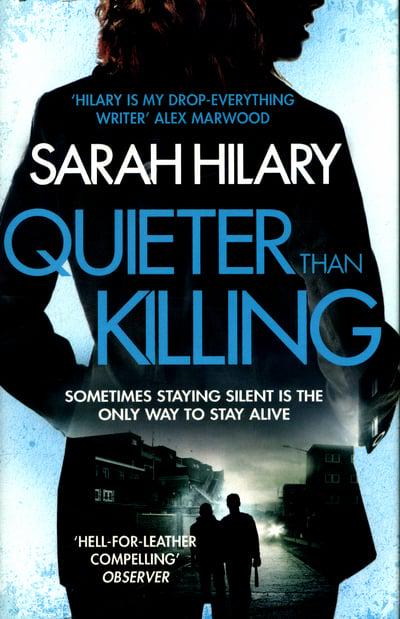
BOOK REVIEW: Quieter Than Killing (DI Marnie Rome, #4) by Sarah Hilary

The fourth book in the DI Marnie Rome series written by Sarah Hilary is Quieter Than Killing. (I have enjoyed the others, Someone Else's Skin, No Other Darkness, and Tastes Like Fear,) This time the story is about a series of violent attacks of people who have previously been accused or convicted of violent or criminal behavior. DI Rome and her partner DS Noah Jake realize that they are looking for a vigilante, someone who has taken the law into their own hands (and decided to break the law in order to punish others they think deserve it).
As they try to find the vigilante, Rome and Jake are also faced with the kidnapping of the 10-year-old so of a jailhouse informant as well as the trashing of the house where Rome’s parents were murdered by her adopted brother, Stephen Keele, who has been moved to an adult prison now that he’s over 18.
There are multiple strengths in these Sarah Hilary mystery thrillers and many of these strengths appear in Quieter Than Killing.
First among these is the depiction of Marnie as a strong female protagonist, working in a predominantly male environment of a police department that solves major crimes in London. Another strong feature of these books is the inclusion of Noah as an openly gay, Black police officer who serves as her deputy. (There are multiple references to how good looking Noah is, as well as his boyfriend Dan, but this doesn’t mean that he’s not subject to both racism and homophobia while doing his job.) Hilary does an excellent job of fleshing out many of the characters in these books, especially in the ways she provides enough information to give the reader insight into their psyches, this includes the criminals and the police officers who try to catch them. One other compelling aspect of the Marnie Rome books is the backstory of Marnie and Noah, and as the books have progressed, there have been developments in how these characters have dealt with and adapted to changes.
I would definitely place these books in the genre of psychological thriller. In Quieter Than Killing, like in her other books, the author presents the crimes (and the criminals) in such a way that their psychologies are revealed and this has quite a memorable impact on the reader. I recommend this book and the others in the series (you don’t have to read them in sequence but why wouldn’t you?) to people who like the work of Jane Casey and Val McDermid, who are other British mystery authors with female protagonists in their books.

Title: Quieter Than Killing (DI Marnie Rome, #4).
Author: 
Sarah Hilary.
Format: Kindle.
Length: 432 pages.
Publisher: Headline.
Date Published: March 19, 2017.
Date Read: February 19, 2022.

GOODREADS RATING: ★★★★☆  (4.0/5.0).

OVERALL GRADE: A- (3.67/4.0).

PLOT: A-.
IMAGERY: B+.
IMPACT: A-.
WRITING: A.

Sunday, June 05, 2022

MadProfessah Voting Guide: June 2022 Los Angeles and California Primary Elections


Here are MadProfessah's positions on how I will be voting have voted in the June 7 2022 California Primary Elections. This post will contain  endorsements information from other organizations like the Los Angeles Times,  California Democratic Party, East Area Progressive Democrats and the Los Angeles County Democratic Party. 


The 2022 Primary Ballot is quite long. Here are my endorsements (how I am voting) along with information about how others are encouraging you to vote. This link will take you to a printable two page version of this voting guide. Names with an asterisk * are openly LGBTQ+ candidates.

Information about judges of the Superior Court were informed by these two documents by two informed insiders (a former Superior Court judge and Someone who works in the DA's office).


The information here is accurate to the best of my knowledge. YMMV.
LAist also has a very helpful voterguide here: https://laist.com/news/politics/voter-game-plan.

CITYWIDE RACES (Los Angeles)


COUNTYWIDE RACES (Los Angeles)


COUNTY JUDGES (Superior Court)


STATEWIDE RACES 


Saturday, May 14, 2022

BOOK REVIEW: Blacktop Wasteland by S.A. Cosby


Blacktop Wasteland is the second  book by this author that I have read; I first read and enjoyed his Razorblade Tears. Blacktop Wasteland is the more celebrated of the two, having won a slew  of awards (Los Angeles Times, Anthony, Macavity, Barry). After enjoying Razorblade Tears so much I wanted to see if Blacktop Wasteland lived up to the hype. The answer is: yes and no.

Both books are in the same genre of “action-packed crime thrillers set in the rural South.” But that’s the end of the similarities between Razorblade Tears and Blacktop Wasteland. Razorblade Tears is basically a story about two very different fathers who reluctantly are working together to find out and get revenge on whoever shot and killed their gay sons at point blank range. Blacktop Wasteland has one central main character, Beauregard “Bug” Montage that the plot hinges on, with the central narrative tension being fueled by the answer to the question of whether Bug is a “good guy who sometimes commits criminal acts” or “a criminal who sometimes does good things.” By the end of the book I don’t think the reader has a definitive answer to this question besides “it’s complicated.”

Ambiguity or the fusion of positive and negative, or dark and light elements is a recurring theme of both Razorblade Tears and Blacktop Wasteland, with it playing an even larger role in the latter. Bug is a talented getaway driver just like his decades-absent father. He is a car whisperer with the automotive equivalent of what a “green thumb” is for gardeners. He used his ill-gotten gains from his participation in a previous heist to open his own auto repair shop in his very small town in southern Virginia and business is Not Good.

Bug has three kids, two boys  with the woman he lives with in a trailer and a daughter he fathered as a teenager more than two decades ago. His cancer-ridden mother is in an expensive assisted-living facility. Bug has a number of financial obligations and not many legitimate sources of income as an ex-con. So when some former criminal associates approach him for a “slam dunk heist” he is not really in a position to resist the siren call of easy money.  

Blacktop Wasteland is a more cerebral book than one would generally expect from an entry in the crime thriller genre. This may explain the broadness of its appeal and the level of hype it has received. A central element is its depiction of the moral/philosophical dilemma of its protagonist, with the author asking the reader in Blacktop Wasteland “What would you do if you were in Bug’s circumstances, with his past and talents and debts?” Bug basically has two choices: work with some sketchy (probably racist) good old boys to drive a getaway car from a jewelry heist OR try to make a sizable dent on reducing his debts by selling his pride and joy: his father Ant Montage’s car, called the Duster, which he has maintained in perfect condition for decades. Blacktop Wasteland begins with Bug winning a street race in the Duster (and then being part of a scam which results in him not actually bringing any money home that night) and it’s clear the Duster is more than just a car to Bug, it’s the last connection he has to the father he idolizes.

So the primary narrative tension of Blacktop Wasteland is sourced in the decision Bug will make about how he will earn money. But it’s clear that the scales are not evenly weighted on the sides of good and evil. It’s not easy for a Black man who has spent time in jail to earn enough money to support himself and others using only legitimate and above board means, especially when his skills and experience are so useful to successful criminal activity. So, it’s not really a surprise when Bug makes the choice he does. What is surprising are the twists and turns that the plot takes afterwards. There are serious and permanent consequences for lots of the people Bug comes into contact with during the story.

In the end, although I was glad I read Blacktop Wasteland and am also convinced it will make an excellent movie when Hollywood inevitably adapts it for the big screen, it didn’t leave as strong an impression on me as Razorblade Tears did. I think it’s because the two books have very different messages in the end. Frankly, I’m not exactly sure what message Cosby was trying to send with Blacktop Wasteland while the message in Razorblade Tears is very clear (accept your children as they are, don’t try to mold them into something you think they should be!) and one I agree with.

Title: Blacktop Wasteland.

Author: S.A. Cosby.
Format: Kindle.
Length: 305 pages.
Publisher: Flatiron Books.
Date Published: July 14, 2020.
Date Read: April 9, 2022.

GOODREADS RATING: ★★★★½☆  (4.5/5.0).

OVERALL GRADE: A/A- (3.83/4.0).

PLOT: A.
IMAGERY: A.
IMPACT: A-.
WRITING: A.

Tuesday, March 29, 2022

2022 OSCARS: The Winners


Here's the full list of the 2022 Oscar winners at the 94th Academic Awards.

Best Picture

CODA

Best Director

Jane Campion, The Power of the Dog

Best Actress in a Leading Role

Jessica Chastain, The Eyes of Tammy Faye

Best Actor in a Leading Role

Will Smith, King Richard

Best Actress in a Supporting Role

Ariana DeBose, West Side Story

Best Actor in a Supporting Role

Troy Kotsur, CODA

Best Original Screenplay

Belfast 

Best Adapted Screenplay

CODA

Best International Feature

Drive My Car, Japan

Best Animated Feature

Encanto

Best Documentary Feature

Summer of Soul

Best Animated Short

The Windshield Wiper

Best Documentary Short

The Queen of Basketball

Best Live Action Short

The Long Goodbye

Best Cinematography

Dune

Best Film Editing

Dune 

Best Production Design

Dune

Best Makeup and Hairstyling

The Eyes of Tammy Faye

Best Costume Design

Cruella

Best Visual Effects

Dune

Best Sound

Dune

Best Original Score

Dune 

Best Original Song

"No Time to Die" — Billie Eilish & Finneas O'Connell, No Time to Die

Sunday, March 27, 2022

2022 OSCARS: My Predictions in the Top 8 Categories

Here is my annual prediction post for the 2022 Oscars, i.e. the 94th Academy Awards. I really just consider the Top 8 categories on the blog but I often play the Oscar prediction game like lots of other people (on other websites) where I think about all 24 categories.  In 2019 I predicted 4 of 8 categories correctly and in 2020 I predicted 6 of 8 correctly.  Last year, I predicted 5 of 8 correctly. This year I have seen 7 of the (bolded) 10 Best Picture nominees (haven't seen Drive My Car, West Side Story or CODA). I do intend to see CODA regardless of whether it wins Best Picture.

Best Picture:
  • "Belfast" 
  • "CODA" 
  • "Don't Look Up"
  • "Drive My Car"
  • "Dune" 
  • "King Richard"
  • "Licorice Pizza"
  • "Nightmare Alley"
  • "The Power of the Dog"
  • "West Side Story"

SHOULD WIN: Dune.
WILL WIN: The Power of the Dog.

Director:
  • Kenneth Branagh (“Belfast”)
  • Ryusuke Hamaguchi (“Drive My Car”)
  • Paul Thomas Anderson (“Licorice Pizza”)
  • Jane Campion (“The Power of the Dog”)
  • Steven Spielberg (“West Side Story”)
SHOULD WIN: Jane Campion, The Power of the Dog.
WILL WIN: Jane Campion, The Power of the Dog.

Lead Actor:
  • Javier Bardem (“Being the Ricardos”)
  • Benedict Cumberbatch (“The Power of the Dog”)
  • Andrew Garfield (“Tick,Tick,...Boom!")
  • Will Smith (“King Richard”)
  • Denzel Washington  (“The Tragedy of Macbeth”)
SHOULD WIN: Will Smith, King Richard.
WILL WIN: Will Smith, King Richard.

Lead Actress:
  • Jessica Chastain (“The Eyes of Tammy Faye”)
  • Olivia Colman (“The Lost Daughter”)
  • Penélope Cruz (“Parallel Mothers”)
  • Nicole Kidman  (“Being the Ricardos”)
  • Kristen Stewart (“Spencer”)
SHOULD WIN: Kristen Stewart, Spencer.
WILL WIN: Jessica Chastain, The Eyes of Tammy Faye

Supporting Actor:
  • Ciarán Hinds (“Belfast”)
  • Troy Kotsur (“CODA”)
  • Jesse Plemons (“The Power of the Dog”)
  • J.K. Simmons (“Being the Ricardos”)
  • Kodi Smit-McPhee  (“The Power of the Dog”)
SHOULD WIN: Kodi Smit-McPhee, The Power of the Dog.
WILL WIN: Troy Katsur, CODA.

Supporting Actress:
  • Jessie Buckley (“The Lost Daughter”)
  • Ariana DeBose (“West Side Story”)
  • Judi Dench (“Belfast”)
  • Kirsten Dunst  (“The Power of the Dog”)
  • Aunjanue Ellis (“King Richard”)
SHOULD WIN: Aunjanue Ellis, King Richard.
WILL WIN: Ariana DeBose, West Side Story.

Original Screenplay:
  • Kenneth Branagh (“Belfast”)
  • Adam McKay; Story by Adam McKay & David Sirota (“Don't Look Up”)
  • Zach Baylin (“King Richard”)
  • Paul Thomas Anderson ("Licorice Pizza")
  • Eskil Vogt and Joachim Trier (“The Worst Person in the World”)
SHOULD WIN: Belfast.
WILL WIN: Belfast.

Adapted Screenplay:
  • Siân Heder (“CODA”)
  • Ryusuke Hamaguchi and Takamasa Oe (“Drive My Car”)
  • Jon Spaihts and Denis Villeneuve and Eric Roth (“Dune”)
  • Maggie Gyllenhaal ("The Lost Daughter")
  • Jane Campion (“The Power of the Dog”)
SHOULD WIN: Dune.
WILL WIN: CODA.

Thursday, March 17, 2022

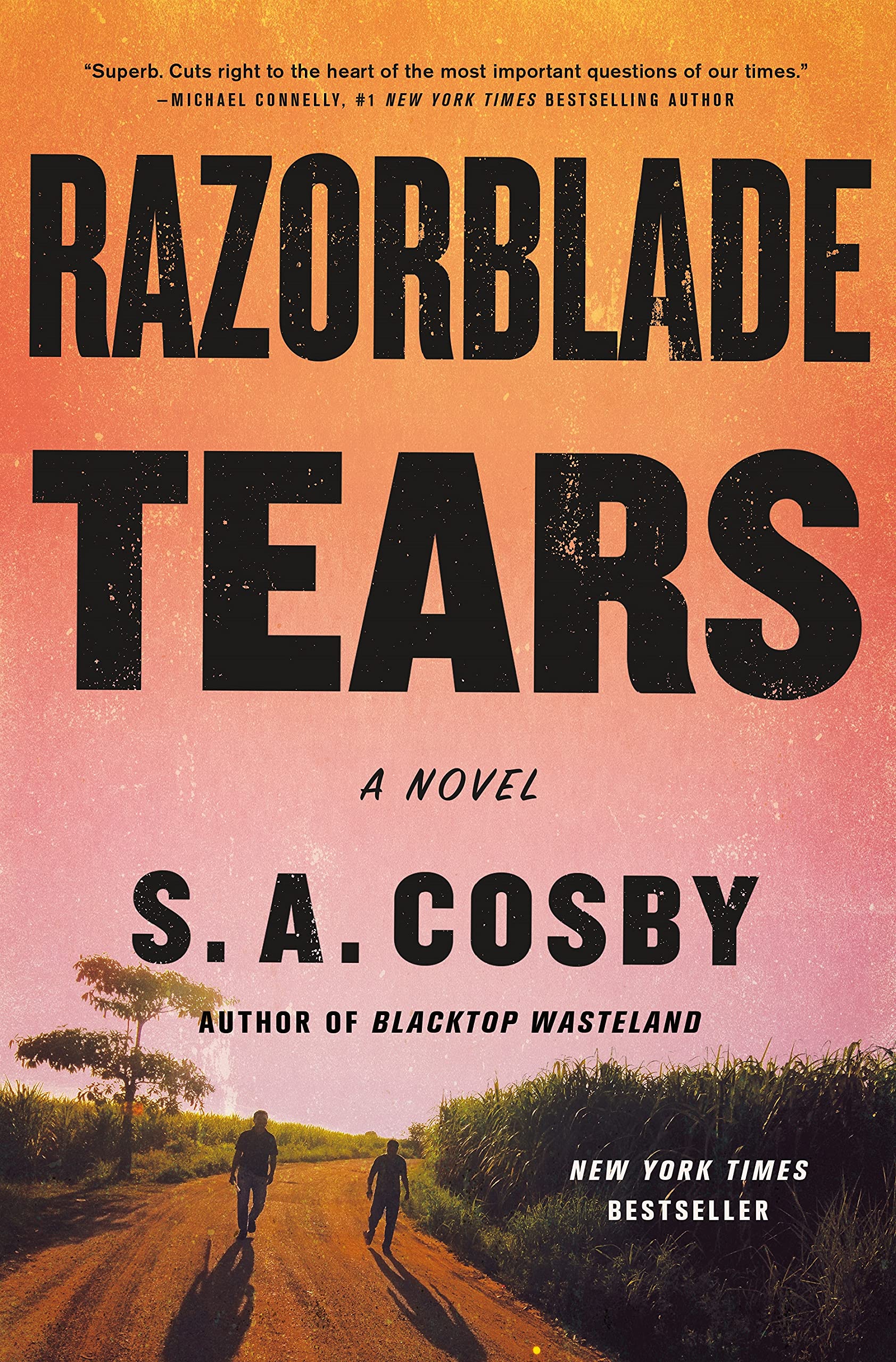
BOOK REVIEW: Razorblade Tears by S.A. Cosby


Razorblade Tears is the first book by this author that I have read; it is his first book after his wildly successful Blacktop Wasteland which won a bucketful of genre awards (Los Angeles Times, Anthony, Macavity, Barry ). The reason I started with Razorblade Tears instead is because it was on sale for $2.99 on Kindle and also because of the intriguing blurb describing the plot.

The first thing that strikes you as you read Razorblade Tears is the superior quality of the prose; Cosby is a master of metaphor and is unafraid to dazzle the reader with the brilliance of his writing. There were several times in the first few chapters that I highlighted sentences and turns of phrases. Eventually one becomes accustomed to instead of entranced by the poetry of the text and the breakneck forward momentum of the plot demands one’s full attention.

The story in Razorblade Tears is incredibly fast-paced and action-packed. After the two dads Buddy Lee and Ike team up as an avenging odd couple trying to find (out) who killed their gay sons, they start poking around and unearth a hornet’s nest of violent gang members, racist bikers, corrupt rap moguls and drug kingpins who are connected to a conspiracy to keep an explosive secret out of public view. Unfortunately for them, they are up against two guys who have suffered the incredibly painful loss of their only sons and fueled by their grief at the violent deaths and their own shame at their own homophobia that warped their relationship with them when they were alive, Buddy Lee and Ike are ready and willing to go as far as it takes (and beyond) to find and punish the people who have brought them such pain by killing their sons. The body count rises rapidly and by the end of the book vengeance has been meted out but at a price which is significant and life-altering to the survivors.

Overall, I was extremely impressed with this first encounter with the work of S.A. Cosby and I intend to read his other work. That said, I wouldn’t call Razorblade Tears a nuanced or complex book. It’s not trying to occupy the niche of the cerebral, densely-plotted mystery that unspools with increasing suspense and narrative tension. Razorblade Tears is more like a full barrel of bourbon rolling down a steep hill with a burning Confederate flag stuck in its side into a large hole that’s leaking profusely: it’s a combustible, compelling spectacle.

Razorblade Tears story moves so quickly that at first you don’t realize how simplistic the plot is. (It’s very easy to figure out who the person behind the boys murders and other crimes is.) But this flaw is outweighed by the overall message that parents should accept their LGBT children for who they are and not try to “change” or disown them because of some heteronormative vision they had of their (and their children’s) lives.


Title: Razorblade Tears.
Author: 
S.A Crosby.
Format: Kindle.
Length: 336 pages.
Publisher: Headline .
Date Published: July 6, 2021.
Date Read: March 8, 2022.

GOODREADS RATING: ★★★★★ (5.0/5.0).

OVERALL GRADE: A/A- (3.83/4.0).

PLOT: B+.
IMAGERY: A-.
IMPACT: A.
WRITING: A+.

Thursday, March 10, 2022

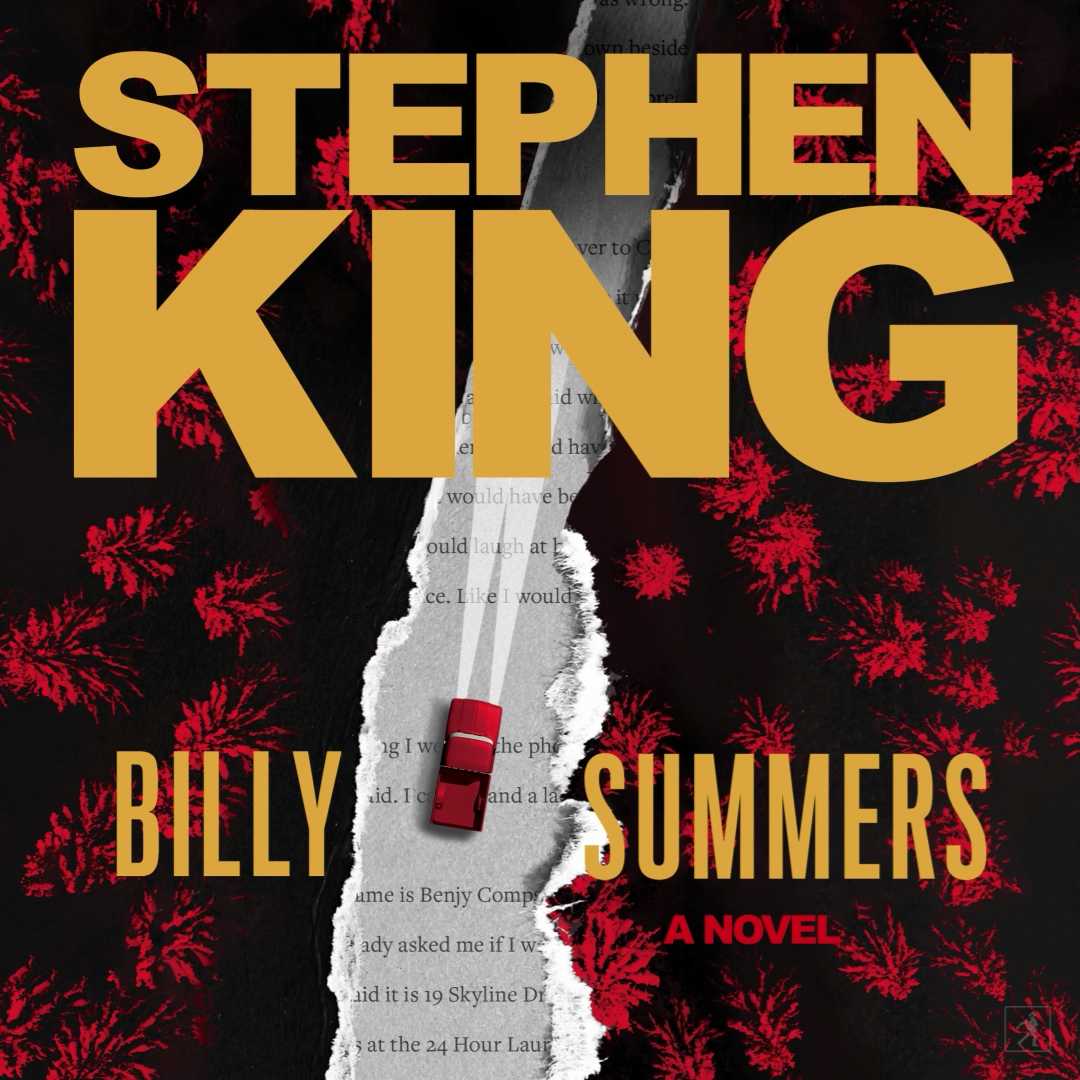
BOOK REVIEW: Billy Summers by Stephen King


Billy Summers is the seventh book of Stephen King’s that I have read. Although he is most well-known for his horror fiction (especially classics such as It, Pet Sematary, Carrie, The Shining, Salem's Lot, Misery and The Stand) I have only read his work in the genres of science fiction (11/22/63) and suspense-thriller (The Institute, The Outsider, Mr. Mercedes, Finders Keepers, End of Watch). King’s latest suspense thriller is Billy Summers, and like almost all of his work, has garnered thousands of ratings and reviews on Goodreads with an enviably high average score (4.27 on a 5-point scale). I begin this review with this information to encourage the reader to think beyond the labels and boundaries of genre; King is simply a consummate storyteller and he writes incredibly readable books. (That being said, I have no intention of reading any of his horror novels any time soon and I still get annoyed when he incorporates supernatural elements into otherwise “straight” mystery/suspense books.)


Billy Summers is a story centered around the title character, who we quickly find out is an assassin for hire; a Gulf War veteran who has been able to monetize his skill and training as a military sniper to help eliminate “bad guys” for money. In Billy Summers, King is setting up and playing with numerous familiar tropes (the criminal/bad guy with the heart of gold, the “one last heist” scenario, and the “if it’s too good to be true, then it probably is.” In fact, the set up IS too good to be true: Billy is being offered a huge sum of money, big enough that this could be his last hit, to kill a guy who he is told has previously killed someone. As I said, the story is centered around Billy and it is told primarily through his eyes, so the reader experiences everything from his perspective. This narrative technique basically insures that even though we know that Billy kills people, we are pretty sure (or we want to believe) that Billy’s not REALLY a bad guy, i.e. he has a heart of gold. As we learn more about the hit Billy is supposed to pull off it appears sketchier and sketchier. The guy who is hiring Billy directly is someone who has done so before and is clearly in the mafia; he’s just a front for the actual person who wants the mark dead, and THAT person remains unknown. There’s another dude involved in creating and maintaining Billy’s cover (as an author who is renting an office in a high-rise with bird’s eye view of the kill spot) who Billy takes an instant dislike to and appears to have the charm (and possibly, ethics) of a used-car salesman.


As the story goes along we follow Billy as he befriends his neighbors in the house that has been rented for him for the summer as well s the other tenants in the office building where he "works" everyday. He seems like a really good guy: is he really going to go through with the killing? I don’t want to include spoilers so I won’t answer that question except to say that everything does not go as planned that day and Billy ends up on the run, being hunted by the mob. 


Right after the day of the hit is planned for the book takes a surprising turn by introducing a new character whose relationship with Billy complicates his plans  for what to do after the events of the day the hit was planned. It’s an interesting stylistic choice by King because Billy Summers becomes a very different book from that point on.


One of the more interesting aspects of Billy Summer is that Billy uses his cover story as an author working on a book on a deadline to actually write a book. He writes the story of his life, beginning around 8-years-old when Billy was forced to kill his mother's boyfriend after that guy had just killed Billy's 5-year-old sister, continuing through his decade or so at a group foster home, his enlistment in the Marines before his 18th birthday and details of his service in Iraq which led to multiple commendations and medals. King depicts the text of Billy's book in a different font and so another trope gets added to Billy Summers (the story within the story). At some points that story of Billy's past becomes more interesting/compelling than the main story of Billy's present and future.


In the end, I didn't like Billy Summers as much as I liked some of King’s other books that I have read such as The Institute, The Bill Hodges trilogy and 11/22/63, but there’s no question  that his signature use of suspense and thrills are as effective as ever. I do appreciate that he was able to sustain this level of engagement with the reader without deploying any supernatural events at all. However, I think the difference between Billy Summers and those others books (which also mostly have limited supernatural elements) is that it’s hard to completely identify with a main character who really does kill people for money, regardless of what a horrific childhood he had. That’s not to say the book is bad or fails to entertain, it’s better than a lot of books and it definitely is entertaining to read. It’s just that Billy Summers doesn’t completely match the ridiculously high standard of “Sheesh, that was a good book!” that one typically has after finishing a Stephen King novel.

Title: Billy Summers.
Author: 
Stephen King.
Format: Hardcover.
Length: 515 pages.
Publisher: Scribner.
Date Published: August 3, 2021.
Date Read: February 8, 2022.

GOODREADS RATING: ★★★★  (4.0/5.0).

OVERALL GRADE: A- (3.75/4.0).

PLOT: A-.
IMAGERY: A-.
IMPACT: A-.
WRITING: A.

Thursday, March 03, 2022

BOOK REVIEW: The Empire's Ruin (Ashes of the Unhewn Throne, #1) by Brian Staveley


Brian Staveley is the author of the epic fantasy series The Chronicles of the Unhewn Throne (The Providence of Fire, The Emperor’s Blades, The Last Mortal Bond.) The Empire’s Ruin is the first book in a new series called Ashes of the Unhewn Throne that is set five years after the conclusion of the previous one.

The first series was primarily a trilogy centered around the three children of the Annurian Emperor (Adare, Kaden, and Valyn) and the ways their lives change following the assassination of their father and the subsequent struggle for power and control of Annur that follows. The three Malkeenian siblings are very different from each other. Adare is the oldest and only daughter, she was closest to their father and a consummate insider, familiar with and adept at palace intrigue and royal politics. Kaden is the oldest son and heir to the throne but has been sent years ago to the distant mountains of Ashk’lan to be trained as a Shin monk. Valyn is the youngest of the family and has been training for years to be a Kettral, one of the near-mythical, elite soldiers who ride the gargantuan raptors of the same name.

In The Empire’s Ruin, Staveley uses a similar tripartite structure, with the narrative following three characters, this time ones whom we don’t know whether they have (or will have) connections to each other. Gwenna Sharpe is a Kettral who fought alongside Valyn in the battles depicted in the earlier trilogy and in the very opening scene of The Empire’s Ruin her Kettral wing suffers a devastating military failure under her command. Ruc Lankatur Lan Luc is a priest of Eria, the Goddess of Love, in Dombâng, the culturally diverse, strategically located city in which the events of Skullsworn (Staveley’s fourth and most controversial book set in the same Annurian Empire as his other works) occurred. Ruc was raised by the Vuo Ton, a tribe of indigenous people who can survive living in the swamps surrounding Dombâng which are full of literally dozens of different species of deadly fish, snakes, insects and plants. Last is Akiil, a liar/thief/con man and former Shin monk (all known living Shin monks were massacred in one of the opening sequences of The Providence of Fire) who knew Kaden, the Heir Apparent to the throne in the Chronicle trilogy. One interesting aspect of the main characters in The Empire’s Ruin that I realized in writing this review that I hadn’t noticed before was that all 3 of the protagonists, Akiil, Gwenna, and Ruc have an important/central other person they are attached to/care for very deeply. With Ruc his “person” is Bien, a fellow priest of Eria who he apparently loves, perhaps in a brother-sister way but we discover may be less chaste as the story progresses. For Akiil, his person is Yerrin, a Shin monk that Akiil rescued from Ashk’lan but who has a decidedly unusual relationship with reality. Akiil also grew up in the slums of the capital city before going to join the Shin monks and he has a definite connection to Skinny Quinn, a girl who used to be part of his close-knit friends when they were young. Gwenna was attached to members of her Wing (the name of the cadre of soldiers she commanded in the Kettral) but the primary attachment she demonstrates in The Empire’s Ruin is to a young orphan girl she names Rat and whom she does her best to raise and protect on an incredibly dangerous and harrowing journey she takes with a group of men who generally would not be sad if she (or Rat) died or if they did the killing.

After the events of the Chronicle trilogy the only remaining Malkeenian sibling who is believed to be alive is Adare, who is now the Annurian Emperor. She is desperately trying to keep the Empire together but has lost the use of the kenta gates (these are special portals that allow certain people, namely Shin monks, to travel instantaneously between gates) and thus the ability to obtain current/relevant intelligence on the state of affairs in the far-flung sectors of her empire. Since Adare was in the first series, she is a familiar character to those readers and even if this time we don’t have access to her inner thoughts as we did when she was a central protagonist she definitely drew me into the story. Gwenna is also a somewhat known quantity so I think I identified with her section(s) of the book the most, although I rooted for Ruc the hardest to succeed. It’s difficult to root for Akiil because he’s literally a crook and he’s trying to trick/swindle Adare. Why should we care about him since he’s an asshole?

One of the strongest features of Staveley’s writing is his depiction of action. There are numerous fight set pieces that are simply stunning. He has set up the story in ways that lead to his characters often being in perilous situations that lead to action scenes. For example, Ruc and Bien are literally forced to become gladiators in a kill-or-be-killed religious ceremony in Dombâng. Gwenna is on a continent where the flora and fauna are warped by the environment to become deadly monsters. Akiil is trying to steal from a ewan who has a literal army of heavily muscled well-trained men who will kill for her at a glance.

Another strong feature of Staveley’s books is what is usually referred to as “worldbuilding.” He includes a dizzying array of cultural and religious beliefs and their nuanced depiction despite how abhorrent some would appear to the reader communicates a sense of verisimilitude to Annur as a real place (for the characters). In the Chronicle trilogy we were introduced to people who worship Ananshael, the God of Death, who are both priests and assassins. (Later, Staveley wrote an entire book called Skullsworn with one of these priests-assassins, Pyrre Lankatur, as the main character.) In this first book of the Ashes trilogy we discover that public death matches are a popular cultural and religious practice in Dombâng.

In the end, I found The Empire’s Ruin, the first book in the Ashes of the Unhewn Throne, to be a worthy successor to the first series and I am very confident that I will be reading more books Staveley writes in this series. As with the Chronicle series it’s clear that in addition to the main plot(s) involving the three main characters, there’s another one involving the gods (this time it’s the Nevariim, who are even more mysterious, and potentially even more evil, than the Csestriim from the first series). I’m hopeful that more information will be revealed about both groups, and their relationship to humans before the Ashes series ends.

Title: The Empire's Ruin (Ashes of the Unhewn Throne, #1).
Author: Brian Staveley
.
Format: Kindle.
Length: 624 pages.
Publisher: Tor Books.
Date Published: July 6, 2021.
Date Read: January 9, 2022.

GOODREADS RATING: ★★★★★  (5.0/5.0).

OVERALL GRADE: A/A- (3.83/4.0).

PLOT: A-.
IMAGERY: A-.
IMPACT: A.
WRITING: A.

LinkWithin

Blog Widget by LinkWithin